

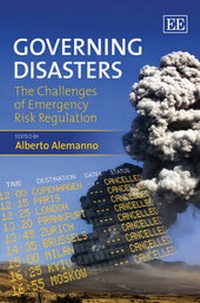
Governing Disasters
The Challenges of Emergency Risk Regulation
Published on 31. October 2011
Book
Hardback
320 pages
978-0-85793-572-4 (ISBN)
Description
Emergency crises have always tested our ability to organize and swiftly execute a coordinated response. Both natural and unnatural disasters pose new questions to which previous experience provides only limited answers. These challenges are arguably greater than ever, in a more globalized world confronted by a truly transnational hazard. This is the first volume that addresses the complexities of the volcanic ash cloud that overshadowed Europe in April 2011, but has subsequently struck again in Australia, Chile and Europe. It does so from a multidisciplinary perspective, drawing upon research from economics, law, sociology and other fields, as well as volcanology and leading expertise in jet engineering. While our knowledge base is wide-ranging, there is a common focus on the practical lessons of the ash cloud crisis both for subsequent eruptions and for emergency risk regulation more generally.
Among many other insights Governing Disasters explains why it was that industry and regulators were largely unprepared for a phenomenon about which we were not scientifically ignorant. It concludes that the toolbox of risk regulation should not be expected to provide ready-made solutions but applied flexibly, creatively and with some humility. This unique and timely resource will be useful to policy makers, scholars, officials of international organizations, research institutions and consumer groups who want to acquire or further develop their capacities for risk regulation. For teaching purposes it is ideal for courses on risk regulation, disaster law and policy, and crisis management or as a supplement in courses on environmental law, transport law, space law or land use.
Contributors: A. Alemanno, N. Bernard, V. Brannigan, C.M. Briggs, M. Broberg, A. Burgess, G.G. Castellano, S. Chakraborty, A. Fioritto, F. Hansstein, L. Jachia, A. Jeunemaitre, C. Johnson, C. Lawless, F.B. Lopez-Jurado, D. Macrae, M. Mazzocchi, V. Nikonov, M. Ragona, M. Simoncini, A.M. Viens
Among many other insights Governing Disasters explains why it was that industry and regulators were largely unprepared for a phenomenon about which we were not scientifically ignorant. It concludes that the toolbox of risk regulation should not be expected to provide ready-made solutions but applied flexibly, creatively and with some humility. This unique and timely resource will be useful to policy makers, scholars, officials of international organizations, research institutions and consumer groups who want to acquire or further develop their capacities for risk regulation. For teaching purposes it is ideal for courses on risk regulation, disaster law and policy, and crisis management or as a supplement in courses on environmental law, transport law, space law or land use.
Contributors: A. Alemanno, N. Bernard, V. Brannigan, C.M. Briggs, M. Broberg, A. Burgess, G.G. Castellano, S. Chakraborty, A. Fioritto, F. Hansstein, L. Jachia, A. Jeunemaitre, C. Johnson, C. Lawless, F.B. Lopez-Jurado, D. Macrae, M. Mazzocchi, V. Nikonov, M. Ragona, M. Simoncini, A.M. Viens
Reviews / Votes
'. . . it is a valuable source of references to the literature for those who wish to learn more about this specific sub-field of risk research. Each of the chapters, from a different disciplinary perspective, ends with a bibliography and identifies a number of themes about the nature of emergency risk regulation. The book should be a valuable source of information and references for regulators, the regulated, and scholars in a wide range of disciplines such as law, economics, risk analysis, management, political science and sociology as it provides an original perspective on emergency risk regulation.' -- Tatjana Jovanic, European Journal of Risk Regulation 'The challenges posed by risky decisions are well documented. These decisions become even more daunting when they must be made in a midst of a crisis. Using the European volcanic risk crisis as the principal case study, Alberto Alemanno and the other contributors to this thought provoking volume derive valuable lessons for how policy makers can cope with the attendant time pressures, uncertainties, coordination issues, and risk communication problems. Once the next emergency risk situation occurs, it may be too late to learn about how to respond. Governing Disasters should be required reading for all policy makers and risk analysts in advance of the next international risk crisis.' -- W. Kip Viscusi, Vanderbilt University, US and Editor, Journal of Risk and Uncertainty 'Catastrophes present us with a paradox. Many people don't think they will happen, so before a catastrophe, regulations are typically viewed as unnecessarily invasive. But in the aftermath of a disaster everybody suddenly blames the government for not having been strict enough. Overregulation often follows. In light of the unprecedented series of catastrophes in recent years, more than ever, top leaders in government and business must understand and overcome this regulatory challenge. Alberto Alemanno's innovative book tells you how.' -- Erwann Michel-Kerjan, The Wharton School's Center for Risk Management, US 'Even the best-laid policy plans go awry. What do we do when, despite our best preventive efforts, a surprise crisis occurs? How do we regulate a disaster while it is unfolding? From volcanoes to tornadoes, and tsunamis to terrorists, extreme events test our resilience. In this illuminating volume, regulatory scholar Alberto Alemanno and his colleagues diagnose the complex combination of natural disasters and flawed institutions that make these crises so difficult to manage. They offer a set of insights and remedies that must be read by anyone concerned to deal with disasters in the future.' -- Jonathan B. Wiener, Duke University, USMore details
Language
English
Place of publication
Cheltenham
United Kingdom
Target group
College/higher education
Dimensions
Height: 234 mm
Width: 156 mm
ISBN-13
978-0-85793-572-4 (9780857935724)
Copyright in bibliographic data and cover images is held by Nielsen Book Services Limited or by the publishers or by their respective licensors: all rights reserved.
Schweitzer Classification
Person
Edited by Alberto Alemanno, Jean Monnet Professor of EU Law and Risk Regulation, HEC Paris, France and New York University, School of Law, New York, US
Content
Contents:
Preface
Introduction
PART I: THE VOLCANIC ASH CRISIS: WHAT HAPPENED AND LESSONS LEARNED
1. What Happened and Lessons Learned: A European and International Perspective
Alberto Alemanno
2. Which Risk and Who Decides When There Are So Many Players?
Donald Macrae
3. The Financial Impact of the Volcanic Ash Crisis on the European Airline Industry
Maddalena Ragona, Francesca Hansstein and Mario Mazzocchi
PART II: REVISITING THE VOLCANIC ASH CRISIS: IDEOLOGIES, NARRATIVES AND COMMUNICATION OF EMERGENCY RISK REGULATION
4. Risk and the Role of Scientific Input for Contingency Planning: A Response to the April 2010 Eyjafjallajoekull Volcano Eruption
Chris Johnson and Alain Jeunemaitre
5. Representing Emergency Risks: Media, Risks and 'Acts of God' in the Volcanic Ash Cloud
Adam Burgess
6. The Challenge of Emergency Risk Communication: Lessons Learned in Trust and Risk Communication from the Volcanic Ash Crisis
Sweta Chakraborty
PART III: BEYOND THE ASH CRISIS: THE MANY FACETS OF EMERGENCY RISK REGULATION
7. Paradigms Lost: Emergency Safety Regulation under Scientific and Technical Uncertainty
Vincent Brannigan
8. If and When: Towards Standard-based Regulation in the Reduction of Catastrophic Risks
Alfredo Fioritto and Marta Simoncini
9. Normative Uncertainty and Ethics in Emergency Risk Regulation
A.M. Viens
PART IV: THE ORGANIZATIONAL MECHANISMS OF EMERGENCY RISK REGULATION
10. Effective Regulatory Processes for Crisis Management: An Analysis of Codified Crisis Management in Europe
Lorenza Jachia and Valentin Nikonov
11. Abrupt Environmental Changes: Scenario Planning for Catastrophic Security Risks
Chad Michael Briggs
12. Systemic Risks and the Reformation of the European Union Law Concerning Network Industries
Francisco B. Lopez-Jurado
PART V: AN EXAMPLE OF CODIFIED EMERGENCY RISK REGULATION: THE EU PASSENGERS' RIGHTS REGULATION
13. Unexpected Turbulence: On the Application of the Denied Boarding Regulation to Exceptional Situations
Morten Broberg
14. The Volcanic Ash Crisis and EU Air Passenger Rights
Nick Bernard
PART VI: NEW IDEAS FOR EMERGENCY RISK REGULATION
15. The Fallout from the Fallout: Hazards, Risks and Organizational Learning
Christopher Lawless
16. Rising from the Ashes: A Governance Perspective on Emerging Systemic Risks
Giuliano G. Castellano
Epilogue
Alberto Alemanno
Index
Preface
Introduction
PART I: THE VOLCANIC ASH CRISIS: WHAT HAPPENED AND LESSONS LEARNED
1. What Happened and Lessons Learned: A European and International Perspective
Alberto Alemanno
2. Which Risk and Who Decides When There Are So Many Players?
Donald Macrae
3. The Financial Impact of the Volcanic Ash Crisis on the European Airline Industry
Maddalena Ragona, Francesca Hansstein and Mario Mazzocchi
PART II: REVISITING THE VOLCANIC ASH CRISIS: IDEOLOGIES, NARRATIVES AND COMMUNICATION OF EMERGENCY RISK REGULATION
4. Risk and the Role of Scientific Input for Contingency Planning: A Response to the April 2010 Eyjafjallajoekull Volcano Eruption
Chris Johnson and Alain Jeunemaitre
5. Representing Emergency Risks: Media, Risks and 'Acts of God' in the Volcanic Ash Cloud
Adam Burgess
6. The Challenge of Emergency Risk Communication: Lessons Learned in Trust and Risk Communication from the Volcanic Ash Crisis
Sweta Chakraborty
PART III: BEYOND THE ASH CRISIS: THE MANY FACETS OF EMERGENCY RISK REGULATION
7. Paradigms Lost: Emergency Safety Regulation under Scientific and Technical Uncertainty
Vincent Brannigan
8. If and When: Towards Standard-based Regulation in the Reduction of Catastrophic Risks
Alfredo Fioritto and Marta Simoncini
9. Normative Uncertainty and Ethics in Emergency Risk Regulation
A.M. Viens
PART IV: THE ORGANIZATIONAL MECHANISMS OF EMERGENCY RISK REGULATION
10. Effective Regulatory Processes for Crisis Management: An Analysis of Codified Crisis Management in Europe
Lorenza Jachia and Valentin Nikonov
11. Abrupt Environmental Changes: Scenario Planning for Catastrophic Security Risks
Chad Michael Briggs
12. Systemic Risks and the Reformation of the European Union Law Concerning Network Industries
Francisco B. Lopez-Jurado
PART V: AN EXAMPLE OF CODIFIED EMERGENCY RISK REGULATION: THE EU PASSENGERS' RIGHTS REGULATION
13. Unexpected Turbulence: On the Application of the Denied Boarding Regulation to Exceptional Situations
Morten Broberg
14. The Volcanic Ash Crisis and EU Air Passenger Rights
Nick Bernard
PART VI: NEW IDEAS FOR EMERGENCY RISK REGULATION
15. The Fallout from the Fallout: Hazards, Risks and Organizational Learning
Christopher Lawless
16. Rising from the Ashes: A Governance Perspective on Emerging Systemic Risks
Giuliano G. Castellano
Epilogue
Alberto Alemanno
Index