

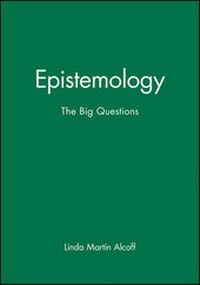
Epistemology
The Big Questions
1st Edition
Published on 30. April 2000
Book
Paperback/Softback
464 pages
978-0-631-20580-7 (ISBN)
Description
As well as including the classic papers from the history of epistemology, this distinctive, wide-ranging anthology provides essential coverage of key contemporary challenges to that tradition.
Reviews / Votes
"Professor Alcoff has assembled a first-rate new collection in epistemology. Its most obvious virtue is that it brings together classic papers in analytic epistemology with recent work in feminist epistemology, allowing comparison and cross-fertilization of work which, for too many, has been treated as if falling into altogether distinct areas. In addition, this collection is sensibly organized more thorough than most, and provided with clear and helpful introductions to each section. It will be valuable resource for both undergraduate and graduate courses." - Mark Norris, Georgetown University"Linda Alcoff presents and organizes central debates in epistemology in a way that both illuminates and bridges diverse contemporary approaches. Her provocative juxtapositions can help to reinvigorate traditional discussions and help set new directions." - Naomi Scheman, Gothenburg University
More details
Series
Language
English
Place of publication
Hoboken
United Kingdom
Publishing group
John Wiley and Sons Ltd
Target group
College/higher education
Professional and scholarly
Dimensions
Height: 246 mm
Width: 173 mm
Thickness: 34 mm
Weight
798 gr
ISBN-13
978-0-631-20580-7 (9780631205807)
Copyright in bibliographic data and cover images is held by Nielsen Book Services Limited or by the publishers or by their respective licensors: all rights reserved.
Schweitzer Classification
Other editions
Additional editions
Book
10/1998
Wiley
€175.52
Article exhausted; check different version
Person
Linda Martin Alcoff is Associate Professor of Philosophy at Syracuse University. She is the author of Real Knowing: New Versions of the Coherence Theory of Knowledge (1996) and co-editor of Feminist Epistemologies (1993) which was named a Critic's Choice Book for 1993 by the American Educational Studies Association.
Content
Preface. Acknowledgments.
Part I: What is Knowledge?:.
1. Introduction.
2. Meditations: Rene Descartes.
3. On Certainty: Ludwig Wittgenstein.
4. The Right to be Sure: A. J. Ayer.
5. Epistemology's End: Catherine Elgin.
Further Reading.
Part II: How Are Beliefs Justified?:.
6. Introduction.
7. Internalism and Externalism in Epistemology: William P. Alston.
8. The General Conditions of Knowledge: Justification: Carl Ginet.
9. What is Justified Belief?: Alvin Goldman.
10. Contextualism and Knowledge Attributions: Keith DeRose.
11. Taking Subjectivity into Account: Lorraine Code.
12. The Practices of Justification: Alessandra Tanesini.
Further Reading.
Part III: What is the Structure of Knowledge?:.
13. Introduction.
14. The Myth of the Given: Roderick Chisholm.
15. The Raft and the Pyramid: Ernest Sosa.
16. The Elements of Coherentism: Laurence BonJour.
17. The Hermeneutic Code: Hans-Georg Gadamer. Further Reading.
Part IV: What is Naturalized Epistemology?:.
18. Introduction.
19. Epistemology Naturalized: W. V. O. Quine.
20. What is 'Naturalized Epistemology? Jaegwon Kim.
21. Putting Naturalized Epistemology to Work: Phyllis Rooney. Further Reading.
Part V: What is Truth?:.
22. Introduction.
23. The Minimal Theory: Paul Horwich.
24. Language, Truth and Reason: Ian Hacking.
25. Pragmatism, Relativism, Irrationalism: Richard Rorty. Further Reading.
Part VI: What if We Don't Know Anything At All?:.
26. Introduction.
27. Cartesian Scepticism and Inference to the Best Explanation: Jonathan Vogel.
28. Skepticism and the Possibility of Knowledge: Barry Stroud.
29. Othello's Doubt/Desdemona's Death: The Engendering of Scepticism: Naomi Scheman.
Further Reading.
Part VII: How is Epistemology Political?.
30. Introduction.
31. The 'Maleness' of Reason: Genevieve Lloyd.
32. Alternative Epistemologies: Charles W. Mills.
33. Idols of the Cave: Mary Tiles and Jim Tiles.
Index.
Part I: What is Knowledge?:.
1. Introduction.
2. Meditations: Rene Descartes.
3. On Certainty: Ludwig Wittgenstein.
4. The Right to be Sure: A. J. Ayer.
5. Epistemology's End: Catherine Elgin.
Further Reading.
Part II: How Are Beliefs Justified?:.
6. Introduction.
7. Internalism and Externalism in Epistemology: William P. Alston.
8. The General Conditions of Knowledge: Justification: Carl Ginet.
9. What is Justified Belief?: Alvin Goldman.
10. Contextualism and Knowledge Attributions: Keith DeRose.
11. Taking Subjectivity into Account: Lorraine Code.
12. The Practices of Justification: Alessandra Tanesini.
Further Reading.
Part III: What is the Structure of Knowledge?:.
13. Introduction.
14. The Myth of the Given: Roderick Chisholm.
15. The Raft and the Pyramid: Ernest Sosa.
16. The Elements of Coherentism: Laurence BonJour.
17. The Hermeneutic Code: Hans-Georg Gadamer. Further Reading.
Part IV: What is Naturalized Epistemology?:.
18. Introduction.
19. Epistemology Naturalized: W. V. O. Quine.
20. What is 'Naturalized Epistemology? Jaegwon Kim.
21. Putting Naturalized Epistemology to Work: Phyllis Rooney. Further Reading.
Part V: What is Truth?:.
22. Introduction.
23. The Minimal Theory: Paul Horwich.
24. Language, Truth and Reason: Ian Hacking.
25. Pragmatism, Relativism, Irrationalism: Richard Rorty. Further Reading.
Part VI: What if We Don't Know Anything At All?:.
26. Introduction.
27. Cartesian Scepticism and Inference to the Best Explanation: Jonathan Vogel.
28. Skepticism and the Possibility of Knowledge: Barry Stroud.
29. Othello's Doubt/Desdemona's Death: The Engendering of Scepticism: Naomi Scheman.
Further Reading.
Part VII: How is Epistemology Political?.
30. Introduction.
31. The 'Maleness' of Reason: Genevieve Lloyd.
32. Alternative Epistemologies: Charles W. Mills.
33. Idols of the Cave: Mary Tiles and Jim Tiles.
Index.