

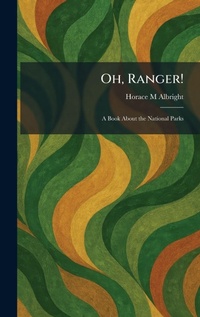
Oh, Ranger!
Description
"Oh, Ranger!" offers a captivating and humorous glimpse into the early years of the United States National Park Service. Written by Horace M. Albright, a foundational figure in the preservation of American wilderness, this work serves as an essential guide and tribute to the men who dedicate their lives to protecting these natural wonders. Through a series of engaging anecdotes and practical insights, the book explores the unique relationship between the park rangers, the diverse wildlife, and the millions of visitors who flock to these iconic landscapes.
From the majestic peaks of the Sierra Nevada to the geothermal marvels of Yellowstone, Albright details the challenges and rewards of managing the nation's most precious territories. Readers will encounter legendary stories of bears, the intricacies of trail management, and the evolving philosophy of conservation that has shaped the American park system. This work is not only a historical document of early 20th-century tourism but also a celebration of the spirit of the outdoors. "Oh, Ranger!" remains a vital resource for anyone interested in the history of conservation, the lore of the American West, and the enduring legacy of the National Parks.
This work has been selected by scholars as being culturally important, and is part of the knowledge base of civilization as we know it. This work was reproduced from the original artifact, and remains as true to the original work as possible. Therefore, you may see the original copyright references, library stamps (as most of these works have been housed in our most important libraries around the world), and other notations in the work.
This work is in the public domain in the United States of America, and possibly other nations. Within the United States, you may freely copy and distribute this work, as no entity (individual or corporate) has a copyright on the body of the work.
As a reproduction of a historical artifact, this work may contain missing or blurred pages, poor pictures, errant marks, etc. Scholars believe, and we concur, that this work is important enough to be preserved, reproduced, and made generally available to the public. We appreciate your support of the preservation process, and thank you for being an important part of keeping this knowledge alive and relevant.