


The Ethical Vision of George Eliot
Communion and Difference
1st Edition
Published on 22. January 2020
Book
Hardback
220 pages
978-0-367-36074-0 (ISBN)
Description
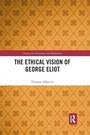
The Ethical Vision of George Eliot is one of the first monographs devoted entirely to the ethical thought of George Eliot, a profoundly significant, influential figure not only in nineteenth-century English and European literature, nineteenth-century women's writing, the history of the novel, and Victorian intellectual culture, but also in the field of literary ethics. Ethics are a predominant theme in Eliot's fictional and non-fictional writings. Her ethical insights and ideas are a defining element of her greatness as an artist and novelist.
Through meticulous close readings of Eliot's fiction, essays, and letters, The Ethical Vision of George Eliot presents an original, complex definition of her ethical vision as she developed it over the course of her career. It examines major novels like Adam Bede, Middlemarch, and Daniel Deronda; many of Eliot's most significant essays; and devotes two entire chapters to Eliot's final book Impressions of Theophrastus Such, an idiosyncratic collection of character sketches that Eliot scholars have heretofore generally overlooked or ignored.
The Ethical Vision of George Eliot demonstrates that Eliot defined her ethical vision alternately in terms of revealing and strengthening a fundamental human communion that links us to other persons, however different and remote from ourselves; and in terms of recognizing and respecting the otherness of other persons, and of the universe more generally, from ourselves. Over the course of her career, Eliot increasingly transitions from the former towards the latter imperative, but she also considerably complicates her conception of otherness, and of what it means to be ethically responsible to it.
Through meticulous close readings of Eliot's fiction, essays, and letters, The Ethical Vision of George Eliot presents an original, complex definition of her ethical vision as she developed it over the course of her career. It examines major novels like Adam Bede, Middlemarch, and Daniel Deronda; many of Eliot's most significant essays; and devotes two entire chapters to Eliot's final book Impressions of Theophrastus Such, an idiosyncratic collection of character sketches that Eliot scholars have heretofore generally overlooked or ignored.
The Ethical Vision of George Eliot demonstrates that Eliot defined her ethical vision alternately in terms of revealing and strengthening a fundamental human communion that links us to other persons, however different and remote from ourselves; and in terms of recognizing and respecting the otherness of other persons, and of the universe more generally, from ourselves. Over the course of her career, Eliot increasingly transitions from the former towards the latter imperative, but she also considerably complicates her conception of otherness, and of what it means to be ethically responsible to it.
More details
Series
Language
English
Place of publication
London
United Kingdom
Publishing group
Taylor & Francis Ltd
Target group
College/higher education
Dimensions
Height: 229 mm
Width: 152 mm
Weight
590 gr
ISBN-13
978-0-367-36074-0 (9780367360740)
Copyright in bibliographic data and cover images is held by Nielsen Book Services Limited or by the publishers or by their respective licensors: all rights reserved.
Schweitzer Classification
Other editions
Additional editions
Thomas Albrecht
The Ethical Vision of George Eliot
Book
09/2021
1st Edition
Routledge
€67.20
Shipment within 10-20 days
E-Book
01/2020
1st Edition
Routledge
€60.49
Available for download
E-Book
01/2020
1st Edition
Routledge
€60.49
Available for download
Person
Thomas Albrecht is an Associate Professor of English at Tulane University in New Orleans, where he teaches nineteenth-century British and European literature, Comparative Literature, and literary theory and criticism. He is the author of The Medusa Effect: Representation and Epistemology in Victorian Aesthetics (2009) and of several journal and book chapter articles on George Eliot's ethics, as well as the editor of Selected Writings by Sarah Kofman (2007).
Content
Acknowledgments
Dedication
Introduction - Communion and Difference in the Ethical Relationship
Chapter One - The Defective Mirror: The Ethics of Realism in Adam Bede and "The Natural History of German Life"
Chapter Two - The Pier Glass Effect: Narrative Ethics in Middlemarch
Chapter Three - Egoism and Empathy in Middlemarch
Chapter Four - "The Balance of Separateness and Communication": Cosmopolitan Ethics in Daniel Deronda
Chapter Five - The Concept of Separateness in "The Modern Hep! Hep! Hep!"
Chapter Six - Moral and Multilingualism in Impressions of Theophrastus Such
Bibliography
Dedication
Introduction - Communion and Difference in the Ethical Relationship
Chapter One - The Defective Mirror: The Ethics of Realism in Adam Bede and "The Natural History of German Life"
Chapter Two - The Pier Glass Effect: Narrative Ethics in Middlemarch
Chapter Three - Egoism and Empathy in Middlemarch
Chapter Four - "The Balance of Separateness and Communication": Cosmopolitan Ethics in Daniel Deronda
Chapter Five - The Concept of Separateness in "The Modern Hep! Hep! Hep!"
Chapter Six - Moral and Multilingualism in Impressions of Theophrastus Such
Bibliography