

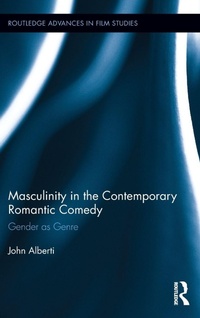
Masculinity in the Contemporary Romantic Comedy
Gender as Genre
1st Edition
Published on 2. May 2013
Book
Hardback
124 pages
978-0-415-63065-8 (ISBN)
Description
This volume addresses the growing obsolescence of traditional constructions of masculine identity in popular romantic comedies by proposing an approach that combines gender and genre theory to examine the ongoing radical reconstruction of gender roles in these films. Alberti creates a unified theory of gender role change in the movies that combines the insights of both poststructuralist gender and narrative genre theory, avoiding binary approaches to the study of gender representation. He establishes the current "crises" in both gender representation and genre development within romantic comedies as examples of experimentation and change towards narratives that feature more egalitarian and less essentialist constructions of gender.
More details
Series
Language
English
Place of publication
London
United Kingdom
Publishing group
Taylor & Francis Ltd
Target group
College/higher education
Illustrations
1 s/w Photographie bzw. Rasterbild
1 Halftones, black and white
Dimensions
Height: 235 mm
Width: 157 mm
Thickness: 12 mm
Weight
361 gr
ISBN-13
978-0-415-63065-8 (9780415630658)
Copyright in bibliographic data and cover images is held by Nielsen Book Services Limited or by the publishers or by their respective licensors: all rights reserved.
Schweitzer Classification
Other editions
Additional editions
Book
11/2016
1st Edition
Routledge
€68.50
Shipment within 10-20 days
E-Book
09/2013
1st Edition
Routledge
€60.49
Available for download
E-Book
09/2013
1st Edition
Routledge
€60.49
Available for download
Person
John Alberti is Professor of English and Director of Cinema Studies at Northern Kentucky University, USA.
Content
1. Masculinity in the Contemporary Romantic Comedy: Gender and/as Genre 2. "'I Love You, Man': Gender Genre Instability in the Bromance" 3. The Emergence of the Anxious Romance:Mumblecore, Neorealism, and Gender Play 4. Greenberg: The Anxious Romance and the Future(s) of the Romantic Comedy