

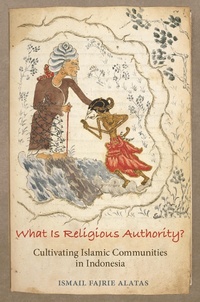
What Is Religious Authority?
Cultivating Islamic Communities in Indonesia
Published on 22. June 2021
Book
Paperback/Softback
286 pages
978-0-691-20431-4 (ISBN)
Description
An anthropologist's groundbreaking account of how Islamic religious authority is assembled through the unceasing labor of community building on the island of Java
This compelling book draws on Ismail Fajrie Alatas's unique insights as an anthropologist to provide a new understanding of Islamic religious authority, showing how religious leaders unite diverse aspects of life and contest differing Muslim perspectives to create distinctly Muslim communities.
Taking readers from the eighteenth century to today, Alatas traces the movements of Muslim saints and scholars from Yemen to Indonesia and looks at how they traversed complex cultural settings while opening new channels for the transmission of Islamic teachings. He describes the rise to prominence of Indonesia's leading Sufi master, Habib Luthfi, and his rivalries with competing religious leaders, revealing why some Muslim voices become authoritative while others don't. Alatas examines how Habib Luthfi has used the infrastructures of the Sufi order and the Indonesian state to build a durable religious community, while deploying genealogy and hagiography to present himself as a successor of the Prophet Mu?ammad.
Challenging prevailing conceptions of what it means to be Muslim, What Is Religious Authority? demonstrates how the concrete and sustained labors of translation, mobilization, collaboration, and competition are the very dynamics that give Islam its power and diversity.
This compelling book draws on Ismail Fajrie Alatas's unique insights as an anthropologist to provide a new understanding of Islamic religious authority, showing how religious leaders unite diverse aspects of life and contest differing Muslim perspectives to create distinctly Muslim communities.
Taking readers from the eighteenth century to today, Alatas traces the movements of Muslim saints and scholars from Yemen to Indonesia and looks at how they traversed complex cultural settings while opening new channels for the transmission of Islamic teachings. He describes the rise to prominence of Indonesia's leading Sufi master, Habib Luthfi, and his rivalries with competing religious leaders, revealing why some Muslim voices become authoritative while others don't. Alatas examines how Habib Luthfi has used the infrastructures of the Sufi order and the Indonesian state to build a durable religious community, while deploying genealogy and hagiography to present himself as a successor of the Prophet Mu?ammad.
Challenging prevailing conceptions of what it means to be Muslim, What Is Religious Authority? demonstrates how the concrete and sustained labors of translation, mobilization, collaboration, and competition are the very dynamics that give Islam its power and diversity.
Reviews / Votes
"Through this highly original study of such articulatory labours in Java, Alatas has written one of the most important books on Islam in Indonesia in years, and crafted a work that deserves to become a central reference for all scholars of Islam and Islamic authority."---Robert W. Hefner, Journal of Islamic Studies "Successfully argues that what is known as "Islam the universal religion" does not reside in the consistency of its teachings. However, one aspect of Islam that is universal is the work of congregational building."---Hasan Mustapa, International Journal of Asian Studies "Provides rich insights for readers who wish to gain a better understanding of comparative Islamic authority. The author's success in blending historical, anthropological and political analyses together makes this book a worthwhile read and a useful source of reference for scholars interested in Islam in Indonesia." * Contemporary Southeast Asia * "A groundbreaking contribution. . . . The book will certainly find its ways to become an important reference in the historical and anthropological study of Islam and religious authority in Indonesia from the premodern to the present times."---Wahyuddin Halim, Religion and Social Communication "A theoretical contribution that presents not only a refined understanding of Islamic authority but also the universality of Islam as a 'concrete universality.'"---Zacky Khairul Umam, International Quarterly for Asian Studies "This book offers a thorough examination of the concept of articulation, enabling scholars and researchers to create a nonhistoricist interpretation of Islam and Islamic history. It helps them to view Islamic history and society as a set of exchanges, disputes and ongoing transactions among Islamic groups that have been put together via various articulatory practices."---Asif Mohiuddin, Public Anthropologist "Alatas' general insight might be extended to any societal and cultural configuration. This makes his monograph relevant well beyond the boundaries of the study of Javanese or Indonesian Islam, and, in fact, beyond the study of Islam or religion in general. . . . [A] layered, important book."---Matteo Bortolini, Reading Religion "[What Is Religious Authority?] challenges prevailing views on Muslim identity by focusing on Indian Ocean networks that frame European influence as just one chapter in a longer historical narrative. It explores the dialogic relationship between transnational and local mobilities across Islamic history, examining how these dynamics shape Islam's social realisation through articulatory labor."---Luigi Sausa, European Journal of East Asian Studies "Provacative. . . . [What Is Religious Authority?] is the product of indefatigable intellectualcuriosity, and one cannot help but admire the ethnohistorian at play in both archive and field site, tacking between Islamic pasts and emergent futures. Equally important, this book joins other recent works that give us a sense of what is possible with a host of research languages, a creative approach to the longue duree, the incisive eye of an ethnographer, and a critical understanding of what, exactly, constitutes Islam.
"---James Hoesterey, The Journal of Asian Studies
More details
Series
Language
English
Place of publication
New Jersey
United States
Target group
College/higher education
Professional and scholarly
Product notice
Paperback (trade)
Illustrations
10 b/w illus.
Dimensions
Height: 229 mm
Width: 152 mm
Thickness: 20 mm
Weight
424 gr
ISBN-13
978-0-691-20431-4 (9780691204314)
Copyright in bibliographic data and cover images is held by Nielsen Book Services Limited or by the publishers or by their respective licensors: all rights reserved.
Schweitzer Classification
Other editions
Additional editions
E-Book
07/2021
1st Edition
Princeton University Press
€29.49
Available for download
Person
Ismail Fajrie Alatas is assistant professor of Middle Eastern and Islamic studies at New York University. Twitter and Instagram @ifalatas