

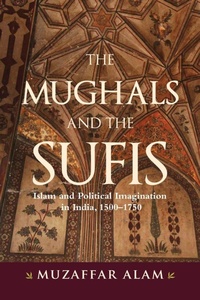
The Mughals and the Sufis
Islam and Political Imagination in India, 1500-1750
Published on 2. January 2022
Book
Paperback/Softback
468 pages
978-1-4384-8488-4 (ISBN)
Description
Examines the relationship between Mughal political culture and the two dominant strains of Islam's Sufi traditions in South Asia: one centered around orthodoxy, the other focusing on a more accommodating and mystical spirituality.
Based on a critical study of a large number of contemporary Persian texts, court chronicles, epistolary collections, and biographies of sufi mystics, The Mughals and the Sufis examines the complexities in the relationship between Mughal political culture and the two dominant strains of Islam's Sufi traditions in South Asia: one centered around orthodoxy, the other focusing on a more accommodating and mystical spirituality. Muzaffar Alam analyses the interplay of these elements, their negotiation and struggle for resolution via conflict and coordination, and their longer-term outcomes as the empire followed its own political and cultural trajectory as it shifted from the more liberal outlook of Emperor Akbar "The Great" (r. 1556-1605) to the more rigid attitudes of his great-grandson, Aurangzeb 'Alamgir (r. 1658-1701). Alam brings to light many new and underutilized sources relevant to the religious and cultural history of the Mughals and reinterprets well-known sources from a new perspective to provide one of the most detailed and nuanced portraits of Indian Islam under the Mughal Empire available today.
Based on a critical study of a large number of contemporary Persian texts, court chronicles, epistolary collections, and biographies of sufi mystics, The Mughals and the Sufis examines the complexities in the relationship between Mughal political culture and the two dominant strains of Islam's Sufi traditions in South Asia: one centered around orthodoxy, the other focusing on a more accommodating and mystical spirituality. Muzaffar Alam analyses the interplay of these elements, their negotiation and struggle for resolution via conflict and coordination, and their longer-term outcomes as the empire followed its own political and cultural trajectory as it shifted from the more liberal outlook of Emperor Akbar "The Great" (r. 1556-1605) to the more rigid attitudes of his great-grandson, Aurangzeb 'Alamgir (r. 1658-1701). Alam brings to light many new and underutilized sources relevant to the religious and cultural history of the Mughals and reinterprets well-known sources from a new perspective to provide one of the most detailed and nuanced portraits of Indian Islam under the Mughal Empire available today.
Reviews / Votes
"An exceptional work of meticulous research and detailed scholarship." - Midwest Book ReviewMore details
Language
English
Place of publication
Albany, NY
United States
Target group
Professional and scholarly
US School Grade: College Graduate Student and over
Product notice
Paperback (trade)
Dimensions
Height: 229 mm
Width: 152 mm
Thickness: 28 mm
Weight
757 gr
ISBN-13
978-1-4384-8488-4 (9781438484884)
Copyright in bibliographic data and cover images is held by Nielsen Book Services Limited or by the publishers or by their respective licensors: all rights reserved.
Schweitzer Classification
Other editions
Additional editions

E-Book
08/2021
1st Edition
De Gruyter
from
€91.99
Available for download
Person
Muzaffar Alam is George V. Bobrinskoy Professor in South Asian Languages and Civilizations at the University of Chicago. He is the author of several books, including, The Languages of Political Islam: India 1200-1800 and The Crisis of Empire in Mughal North India: Awadh and the Punjab, 1707-1748.
Content
Preface and Acknowledgements
1. Introduction: A Long View of Sufism and Political Culture in India
2. The Mughals, the Sufi Shaikhs, and the Formation of the Akbari Dispensation
3. A Sufi Critique of Religious Law, Tasawwuf, and Politics in Mughal India
4. Shah Madar, Sufi Religion, and a View of "True Islam" in a Mughal Chishti Tazkira
5. Strategy and Imagination in a Mughal Sufi Story of Creation
6. In Search of a Sacred King: Dara Shukoh and the Yogavasisthas of Mughal India
7. Piety, Poetry, and the Contested Loyalties of Mughal Princesses, c. 1635-1700
8. The Naqshbandi Shaikhs of Sirhind in Aurangzeb's Empire and Its Aftermath
Conclusion
Bibliography
Index
1. Introduction: A Long View of Sufism and Political Culture in India
2. The Mughals, the Sufi Shaikhs, and the Formation of the Akbari Dispensation
3. A Sufi Critique of Religious Law, Tasawwuf, and Politics in Mughal India
4. Shah Madar, Sufi Religion, and a View of "True Islam" in a Mughal Chishti Tazkira
5. Strategy and Imagination in a Mughal Sufi Story of Creation
6. In Search of a Sacred King: Dara Shukoh and the Yogavasisthas of Mughal India
7. Piety, Poetry, and the Contested Loyalties of Mughal Princesses, c. 1635-1700
8. The Naqshbandi Shaikhs of Sirhind in Aurangzeb's Empire and Its Aftermath
Conclusion
Bibliography
Index