


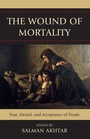
The Wound of Mortality
Fear, Denial, and Acceptance of Death
Published on 22. January 2010
Book
Hardback
216 pages
978-0-7657-0699-7 (ISBN)
Description
Death is a much avoided topic. Literature on mourning exists, but it focuses chiefly upon the death of others. The inevitable psychic impact of one's own mortality is not optimally covered either in this literature on mourning or elsewhere in psychiatry and psychoanalysis. The Wound of Mortality brings together contributions from distinguished psychoanalysts to fill this gap by addressing the issue of death in a comprehensive manner. Among questions the contributors raise and seek to answer are: Do children understand the idea of death? How is adolescent bravado related to deeper anxieties about death? Is it normal and even psychologically healthy to think about one's own death during middle age? Does culture-at-large play a role in how individuals conceptualize the role of death in human life? Is death "apart" from or "a part" of life? Enhanced understanding of such matters will help mental health clinicians treat patients struggling with death-related concerns with greater empathy.
Reviews / Votes
This anthology is edited by Salman Akhtar, who is now well on his way to becoming the most prolific author in psychoanalytic history. Akhtar's sterling introduction, together with twelve subsequent essays by psychoanalysts, offers a vast examination of death, ranging from Freudian to post-Freudian commentary, from the theoretical to the clinical, from the cultural to the intrapsychic, from the transferential to the countertransferential, and from the developmental to the defensive. Recalling E.M. Forster's remark that physical death destroys us whereas the thought of death may save us, readers of this book might also experience the wound of mortality as losing some of its sting. -- Patrick Mahony, PhD, professor emeritus, University of Montreal; training and supervising analyst, Canadian Psychoanalytic Society If you believe as I do that psychoanalysts have underestimated the importance of the conscious and cultural meanings of mortality by emphasizing its unconscious significances alone, this book restores the appropriate balance that is not to be missed. As a reward, the reader's empathic sensitivity will be broadened and interpretations of all sorts of anxieties, fantasies, and concerns about death will be enriched. -- David M. Sachs, MD, training and supervising analyst, Psychoanalytic Center of PhiladelphiaMore details
Series
Language
English
Place of publication
Northvale NJ
United States
Target group
Professional and scholarly
Dimensions
Height: 235 mm
Width: 157 mm
Thickness: 18 mm
Weight
511 gr
ISBN-13
978-0-7657-0699-7 (9780765706997)
Copyright in bibliographic data and cover images is held by Nielsen Book Services Limited or by the publishers or by their respective licensors: all rights reserved.
Schweitzer Classification
Other editions
Additional editions
The Wound of Mortality
Fear, Denial, and Acceptance of Death
E-Book
01/2010
1st Edition
Jason Aronson, Inc.
€94.99
Available for download

The Wound of Mortality
Fear, Denial, and Acceptance of Death
E-Book
01/2010
1st Edition
Jason Aronson, Inc.
€94.99
Available for download
Persons
Salman Akhtar is professor of psychiatry at Jefferson Medical College and Training and Supervising Analyst at the Psychoanalytic Center of Philadelphia.
Content
Chapter 1. Freud's Todesangst and Ghalib's Ishrat-e-Qatra: Two Perspectives on Death
Chapter 2. What Happens When You Die: Three to Four Year Olds Chatting About Death
Chapter 3. Children's Understanding of Death
Chapter 4. Symbolic Death: East and West
Chapter 5. It Is Not Over When It's Over: Reflections on Death and Mourning
Chapter 6. Fear of Death: Analyst and Patient in the Same Boat
Chapter 7. The Dead Self Must Be Reborn
Chapter 8. Living to Die and Dying to Live: Normal and Pathological Considerations of Death Anxiety
Chapter 9. Facing Death: Intrapsychic Conflict and Intergenerational Passage
Chapter 10. Eastern Intersubjectivity: Relational Homes for Frailty and Death
Chapter 11. Demise and Illusion
Chapter 12. Is That All There Is?: A Concluding Commentary on Psychoanalysis and Death
Chapter 2. What Happens When You Die: Three to Four Year Olds Chatting About Death
Chapter 3. Children's Understanding of Death
Chapter 4. Symbolic Death: East and West
Chapter 5. It Is Not Over When It's Over: Reflections on Death and Mourning
Chapter 6. Fear of Death: Analyst and Patient in the Same Boat
Chapter 7. The Dead Self Must Be Reborn
Chapter 8. Living to Die and Dying to Live: Normal and Pathological Considerations of Death Anxiety
Chapter 9. Facing Death: Intrapsychic Conflict and Intergenerational Passage
Chapter 10. Eastern Intersubjectivity: Relational Homes for Frailty and Death
Chapter 11. Demise and Illusion
Chapter 12. Is That All There Is?: A Concluding Commentary on Psychoanalysis and Death