


Comics and Children's Magazines
1st Edition
Published on 11. May 2026
Book
Hardback
186 pages
978-1-041-24540-7 (ISBN)
Description
Comics and serial print have a long, closely intertwined history, with the earliest comics proliferating in newspapers before gradually migrating to children's magazines. In positioning itself between the booming research on comics and periodicals and comics and children's culture, this book offers a transnational perspective on the diverse connections between the ninth art and magazines.
Beginning with the heyday of children's periodicals and their incorporation of comics since the late nineteenth century in the UK, the book ends with a survey of paratextual reader engagement in Topolino issues until the 2010s. Its eight chapters showcase different possibilities for analysing vast, serial corpora, ranging from thematic and formal approaches to more distant readings mapping evolutions across magazine issues. It covers the impact of American comics on the Corriere dei Piccoli magazines from the 1920s and 1930s, forms of editorial communication in French and Belgian magazines from the 1930s and 1940s, the interplay of artistic pursuit, commercial needs, and national identity in the American Camera Comics from the mid-1940s, the comics scare in Italy read through the Italian Western comic Pecos Bill, the changing editorial policies of French magazine Lisette, and the construction of post-war national identity in Greek comics.
This book will be of great interest to comic and children's literature enthusiasts along with researchers of comic studies, cultural studies, literature and art. The chapters in this book were originally published as a special issue in the Journal of Graphic Novels and Comics.
Beginning with the heyday of children's periodicals and their incorporation of comics since the late nineteenth century in the UK, the book ends with a survey of paratextual reader engagement in Topolino issues until the 2010s. Its eight chapters showcase different possibilities for analysing vast, serial corpora, ranging from thematic and formal approaches to more distant readings mapping evolutions across magazine issues. It covers the impact of American comics on the Corriere dei Piccoli magazines from the 1920s and 1930s, forms of editorial communication in French and Belgian magazines from the 1930s and 1940s, the interplay of artistic pursuit, commercial needs, and national identity in the American Camera Comics from the mid-1940s, the comics scare in Italy read through the Italian Western comic Pecos Bill, the changing editorial policies of French magazine Lisette, and the construction of post-war national identity in Greek comics.
This book will be of great interest to comic and children's literature enthusiasts along with researchers of comic studies, cultural studies, literature and art. The chapters in this book were originally published as a special issue in the Journal of Graphic Novels and Comics.
More details
Language
English
Place of publication
London
United Kingdom
Publishing group
Taylor & Francis Ltd
Target group
College/higher education
General, Postgraduate, Undergraduate Advanced, and Undergraduate Core
Dimensions
Height: 246 mm
Width: 174 mm
Weight
520 gr
ISBN-13
978-1-041-24540-7 (9781041245407)
Copyright in bibliographic data is held by Nielsen Book Services Limited or its licensors: all rights reserved.
Schweitzer Classification
Other editions
Additional editions
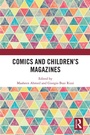
Maaheen Ahmed | Giorgio Busi Rizzi
Comics and Children's Magazines
E-Book
05/2026
Routledge
€56.99
Available for download
Maaheen Ahmed | Giorgio Busi Rizzi
Comics and Children's Magazines
E-Book
05/2026
Routledge
€56.99
Available for download
Persons
Maaheen Ahmed is an associate professor of comparative literature at Ghent University specializing in comics, periodicals, and children's culture.
Giorgio Busi Rizzi is FWO senior postdoctoral fellow and adjunct professor at Ghent University, teaching the comics and graphic novels course. His current project investigates authorship in post-digital comics; his previous research analyzed nostalgic aesthetics and practices in comics, and experimental digital comics.
Giorgio Busi Rizzi is FWO senior postdoctoral fellow and adjunct professor at Ghent University, teaching the comics and graphic novels course. His current project investigates authorship in post-digital comics; his previous research analyzed nostalgic aesthetics and practices in comics, and experimental digital comics.
Content
Introduction: Comics and Children's Magazines 1. Stories and Pictures for Boys and Girls: Identifying the Child Reader in British Comics 1890-1920 2. Domesticating American Serial Characters in European Children's Comics Magazines: The Case of Corriere dei Piccoli in the 1910s 3. Editorial Communication: Letter Columns in the French-language (Comics) Magazines (1934-1949) 4. Cameras and young people belong together: Camera Comics (1944-46) as an imaginative, ideological and commercial space for addressing and depicting American child photographers 5. Pecos Bill and the Campaign against Children's Comics in Postwar Italy 6. Lisette and the disappearance of illustres for girls 7. 1953-1970. Stories of Young Orphans in the Service of National Reconciliation 8. "Topolino" beyond comics: fostering readership engagement and parasocial relationship through the paratextual apparatus (1960-2010)