

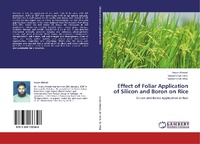
Effect of Foliar Application of Silicon and Boron on Rice
Silicon and Boron Application in Rice
Published on 24. May 2012
Book
Paperback/Softback
132 pages
978-3-659-13834-8 (ISBN)
Description
Pakistan is 3rd top producer of rice with 2.36 M ha area, 4.82 MT production, 0.9% of GDP and contributes 4.4% in agriculture annually. Pakistani rice is well known for its quality and aroma and ranked as 5th country for rice export but yield level is comparatively low and 36% yield gap has been observed. It has been deduced from the research that along with NPK, silicon (Si) and boron (B) should be introduced in rice production. Silicon can control drought stress, insect pests, diseases, radiation damage and metallic toxicity (Fe & Al) in rice. It also provides mechanical strength, prevents lodging and enhances photosynthetic activity and plant immunity. While boron (B) regulates carbohydrates transportation, cell division, cell wall strength and development, onset of fruits and seeds, pollen viability and affects plant development, reproduction, respiration and physiology. That's why this study was proposed and resulted that a combination of silicon and boron solutions @ 1.5% and 1.0% respectively should be applied as foliar spray for higher and sustainable rise production.
More details
Language
English
Place of publication
Germany
Target group
Children/juvenile
Product notice
Paperback (trade)
Unsewn / adhesive bound
Dimensions
Height: 220 mm
Width: 150 mm
Thickness: 8 mm
Weight
215 gr
ISBN-13
978-3-659-13834-8 (9783659138348)
Copyright in bibliographic data and cover images is held by Nielsen Book Services Limited or by the publishers or by their respective licensors: all rights reserved.
Schweitzer Classification
Persons
Mr. Awais Ahmad was born on 29th January, 1987 in Gujranwala, Pakistan. He completed his Matriculation from Govt. High School Chahal Kahan and Intermediate from Punjab Group of Colleges. He completed is M.Sc(Hons.) Agronomy from University Of Agriculture, Faisalabad, under the kind supervision of Dr. Muhammad Tahir during 2010-11.