

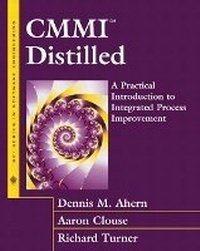
CMMI(SM) Distilled
A Practical Introduction to Integrated Process Improvement
Published on 18. July 2001
Book
Paperback/Softback
336 pages
978-0-201-73500-0 (ISBN)
Description
With CMMI (Capability Maturity Model Integration), top software quality experts have gone far beyond the successful CMM, codifying every aspect of model-based process improvement in one integrated framework. This concise, authoritative guide has three goals: to help understand the benefits of an integrated approach to process improvement; to introduce the CMMI project's new tools for multi-discipline process improvement; and to provide practical guidance in selecting and using these tools. The authors begin by identifying key shortcomings of traditional process improvement in 21st century environments that involve more people and organizations, must be delivered more quickly, and utilize the latest innovations. Next, they introduce the new CMMI standard, showing how it overcomes these limitations, adding substantial quality and value in development, systems engineering, acquisition, and other key areas. Finally, the authors walk through the process of implementing and using CMMI, presenting lessons learned by pioneers in integrated process improvement.
More details
Language
English
Place of publication
Boston
United States
Publishing group
Pearson Education (US)
Target group
College/higher education
Dimensions
Height: 235 mm
Width: 187 mm
Thickness: 15 mm
Weight
509 gr
ISBN-13
978-0-201-73500-0 (9780201735000)
Copyright in bibliographic data and cover images is held by Nielsen Book Services Limited or by the publishers or by their respective licensors: all rights reserved.
Schweitzer Classification
Other editions
New editions
Dennis Ahern | Aaron Clouse | Richard Turner
CMMI Distilled
A Practical Introduction to Integrated Process Improvement
Book
09/2003
2nd Edition
Addison Wesley
€41.46
Article exhausted; check for reprint
Persons
Dennis M. Ahern is an advisory engineer at Northrop Grumman Corporation. Previously, he taught at Yale University and the University of Maryland. He was the deputy project manager of the CMMI Product Development Team and a co-leader of the CMMI Editor Team. He is also an author of CMMI.
Aaron Clouse is an engineering fellow at Raytheon Company. He was a member of the CMMI Editor Team and is an author of CMMI.
Richard Turner, a research professor in engineering management and systems engineering at the George Washington University, approaches balanced software development and acquisition with broad industry and government experience and a skeptical attitude toward best practices. In support of the U.S. Department of Defense, he is responsible for identifying and transitioning new software technology into the development and acquisition of complex, software-intensive defense systems. Dr. Turner was on the original author team for Capability Maturity Model Integration (CMMI) and is coauthor off CMMI Distilled, Second Edition (Addison-Wesley, 2004).
Aaron Clouse is an engineering fellow at Raytheon Company. He was a member of the CMMI Editor Team and is an author of CMMI.
Richard Turner, a research professor in engineering management and systems engineering at the George Washington University, approaches balanced software development and acquisition with broad industry and government experience and a skeptical attitude toward best practices. In support of the U.S. Department of Defense, he is responsible for identifying and transitioning new software technology into the development and acquisition of complex, software-intensive defense systems. Dr. Turner was on the original author team for Capability Maturity Model Integration (CMMI) and is coauthor off CMMI Distilled, Second Edition (Addison-Wesley, 2004).
Content
Figure List.
Preface.
I. INTEGRATED PROCESS IMPROVEMENT.
1. Why Integrated Process Improvement?
The Engineering Environment of the Twenty-First Century.
Concurrent Engineering and the Cross-Discipline Team.
A Proliferation of Models and Standards.
The Benefits of Integrated Process Improvement.
Conclusions.
2. Implementing Integrated Process Improvement.
Starting Integrated Process Improvement.
Building an Integrated Improvement Infrastructure.
Integrating Legacy Processes and Initiatives.
Using Assessments.
Integrated Process Improvement Examples.
II. The CMMI Models.
3. The CMMI Concept.
CMMI Project Organization.
CMMI Objectives.
The Three Source Models.
Process Areas.
An Extensible Framework.
4. CMMI Content.
Content Classification.
Required Materials.
Expected Materials.
Informative Materials.
Document Map.
5. CMMI Representations.
Staged Models.
Continuous Models.
CMMI Model Representations.
6. CMMI Dimensions for Measuring Improvement.
Capability Dimension.
Maturity Dimension.
Generic Practices in the Capability Dimension.
Generic Practices in the Maturity Dimension.
Organizational Capability Evolution.
7. CMMI Process Areas.
Process Management Process Areas.
Project Management Process Areas.
Engineering Process Areas.
Support Process Areas.
Integrated Product and Process Development Process Areas.
Acquisition Process Areas.
Relationships with CMMI Components.
III. Using CMMI.
8. Selecting the Appropriate Disciplines.
The Discipline Dilemma.
Your Situation.
The IPPD Extension.
The Acquisition Extension.
Selecting the Appropriate Model.
9. Picking a Representation.
Reasons for Liking Staged Models.
Reasons for Liking Continuous Models.
Reasons for Choosing a CMMI Representation.
10. Assessments with CMMI.
Assessment Requirements for CMMI.
Standard CMMI Assessment Method for Process Improvement.
Using Assessments in Process Improvement.
Making a CMMI Model Your Own (Tailoring).
IV. The Future of CMMI.
11. Evolving CMMI.
Single Versus Dual Representations.
Collection of Issues for Version 1.1 and Beyond.
Afterword.
The Charge of the CMMI Product Team.
Appendix A. Summary of CMMI-SE/SW/IPPD Models: Summary of Continuous Representation.
Appendix B. Summary of CMMISE/SW/IPPD Models: Summary of Staged Representation .
Appendix C. References.
Appendix D. Resources.
Index. 0201735008T04062001
Preface.
I. INTEGRATED PROCESS IMPROVEMENT.
1. Why Integrated Process Improvement?
The Engineering Environment of the Twenty-First Century.
Concurrent Engineering and the Cross-Discipline Team.
A Proliferation of Models and Standards.
The Benefits of Integrated Process Improvement.
Conclusions.
2. Implementing Integrated Process Improvement.
Starting Integrated Process Improvement.
Building an Integrated Improvement Infrastructure.
Integrating Legacy Processes and Initiatives.
Using Assessments.
Integrated Process Improvement Examples.
II. The CMMI Models.
3. The CMMI Concept.
CMMI Project Organization.
CMMI Objectives.
The Three Source Models.
Process Areas.
An Extensible Framework.
4. CMMI Content.
Content Classification.
Required Materials.
Expected Materials.
Informative Materials.
Document Map.
5. CMMI Representations.
Staged Models.
Continuous Models.
CMMI Model Representations.
6. CMMI Dimensions for Measuring Improvement.
Capability Dimension.
Maturity Dimension.
Generic Practices in the Capability Dimension.
Generic Practices in the Maturity Dimension.
Organizational Capability Evolution.
7. CMMI Process Areas.
Process Management Process Areas.
Project Management Process Areas.
Engineering Process Areas.
Support Process Areas.
Integrated Product and Process Development Process Areas.
Acquisition Process Areas.
Relationships with CMMI Components.
III. Using CMMI.
8. Selecting the Appropriate Disciplines.
The Discipline Dilemma.
Your Situation.
The IPPD Extension.
The Acquisition Extension.
Selecting the Appropriate Model.
9. Picking a Representation.
Reasons for Liking Staged Models.
Reasons for Liking Continuous Models.
Reasons for Choosing a CMMI Representation.
10. Assessments with CMMI.
Assessment Requirements for CMMI.
Standard CMMI Assessment Method for Process Improvement.
Using Assessments in Process Improvement.
Making a CMMI Model Your Own (Tailoring).
IV. The Future of CMMI.
11. Evolving CMMI.
Single Versus Dual Representations.
Collection of Issues for Version 1.1 and Beyond.
Afterword.
The Charge of the CMMI Product Team.
Appendix A. Summary of CMMI-SE/SW/IPPD Models: Summary of Continuous Representation.
Appendix B. Summary of CMMISE/SW/IPPD Models: Summary of Staged Representation .
Appendix C. References.
Appendix D. Resources.
Index. 0201735008T04062001