

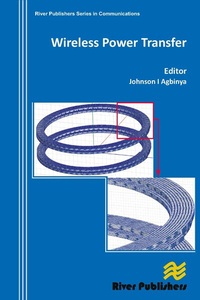
Wireless Power Transfer
1st Edition
Published on 21. August 2012
Book
Hardback
414 pages
978-87-92329-23-3 (ISBN)
Description
Nikola Tesla's dream in the early 20th century of a "World Wireless System" led him to build the Wardenclyffe Tower, a prototype base station serving as an emitter for his "World Wireless System". The base station was to supply wireless electrical energy to a distant receiver. This book builds upon that dream and is a result of intensive research interest in powerline, machine to machine communications and wireless power transfer globally. Wireless energy transfer or Witricity (WIreless elecTRICITY) transfers electricity instead of data. The technology is useful in cases where instantaneous or continuous energy is needed but interconnecting wires are inconvenient, hazardous, or impossible. The transfer is made through inductive coupling and electromagnetic radiation. Inductive coupling provides optimum power delivery to a receiver load if both the emitter and the receiver achieve magnetic resonance concurrently. Energy transfer systems mostly use antennas operating in their near field regions. As fossil energy sources are being depleted rapidly worldwide and oil prices soar, solar energy enhanced with wireless power transfer (WPT) have become reasonable alternatives for renewable energy and power harvesting. They are finding use in transportation, electric and hybrid vehicles, very fast trains and the emerging field of Internet of Things. This book is written by the leading experts on wireless energy transfer technology and its applications. It introduces and explains the technology in great details and provides the theory and practice of WPT through the two approaches of coupled mode theory and circuit theory. Both approaches are dependent on resonance techniques. The level of presentation is suitable for design and training. In depth coverage is provided on near field concepts; coupled-mode theory and models; circuit models of inductive antennas; radiative and inductive wireless power transfer, wireless power relay concepts, optimization techniques for wireless power transfer systems, control of wireless power transfer systems, wireless charging concepts; wireless energy transfer applications in electric vehicles, embedded medical systems and propagation in human tissues. Each chapter is written by experts on a selected aspect of wireless energy transfer. The authors have gone to great lengths to provide worked examples to assist the reader in working through some of the difficult concepts and to allow more understanding. The book is an excellent foundation for applying wireless energy transfer technologies in most fields including transportation, communication, home automation, biomedical systems and home appliances. The book is recommended to practitioners and engineers in the power industry, students in universities and research institutes. Honours and post graduate students in Physics, electrical/electronic engineering and computer science will find the book easy to read and apply because of the mode of presentation.
More details
Language
English
Place of publication
Gistrup
Denmark
Target group
Professional and scholarly
Product notice
sewn/stitched
Cloth over boards
Dimensions
Height: 240 mm
Width: 161 mm
Thickness: 27 mm
Weight
789 gr
ISBN-13
978-87-92329-23-3 (9788792329233)
Copyright in bibliographic data and cover images is held by Nielsen Book Services Limited or by the publishers or by their respective licensors: all rights reserved.
Schweitzer Classification
Other editions
New editions

Johnson I. Agbinya
Wireless Power Transfer
Book
02/2016
2nd Edition
River Publishers
€111.50
Shipment within 10-20 days
Additional editions
Johnson I. Agbinya
Wireless Power Transfer
Book
06/2023
1st Edition
River Publishers
€69.51
Article exhausted; check different version
Person
Johnson I. Agbinya
Content
Wireless Power Transfer