

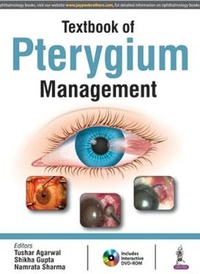
Textbook of Pterygium Management
Published on 30. June 2017
Book
Paperback/Softback
178 pages
978-93-86261-54-0 (ISBN)
Description
A pterygium is a growth that develops on the conjunctiva or mucous membrane that covers the white part of the eye. It is a benign or noncancerous growth that is often shaped like a wedge. In some cases, a pterygium can extend to the cornea. A pterygium usually doesn't cause problems or require treatment, but it can be removed if it interferes with vision. The exact cause of pterygium isn't known but one explanation is that too much exposure to ultraviolet light can lead to these growths (Healthline.com).
This book is a comprehensive guide to the diagnosis and management of pterygium.
Divided into four main sections, the book begins with an introduction to pterygium, and its etiopathogenesis, possible causes and diagnosis.
The following sections explain numerous surgical techniques for its management, covering both traditional and newer procedures; and treatment of recurrent pterygium.
The final section describes challenging situations in the management of pterygium including post surgical complications, and its treatment with co-existing disorders such as cataract, glaucoma, and corneal opacity.
The text is highly illustrated with clinical photographs and is accompanied by an interactive DVD ROM.
Key Points
Comprehensive guide to the diagnosis and management of pterygium
Covers both traditional and newer surgical techniques, and recurrent pterygium
Discusses post surgical complications and treatment with co-existing disorders
Includes interactive DVD ROM
This book is a comprehensive guide to the diagnosis and management of pterygium.
Divided into four main sections, the book begins with an introduction to pterygium, and its etiopathogenesis, possible causes and diagnosis.
The following sections explain numerous surgical techniques for its management, covering both traditional and newer procedures; and treatment of recurrent pterygium.
The final section describes challenging situations in the management of pterygium including post surgical complications, and its treatment with co-existing disorders such as cataract, glaucoma, and corneal opacity.
The text is highly illustrated with clinical photographs and is accompanied by an interactive DVD ROM.
Key Points
Comprehensive guide to the diagnosis and management of pterygium
Covers both traditional and newer surgical techniques, and recurrent pterygium
Discusses post surgical complications and treatment with co-existing disorders
Includes interactive DVD ROM
More details
Language
English
Place of publication
New Delhi
India
Target group
College/higher education
Illustrations
181 Farbfotos bzw. farbige Rasterbilder, 18 Tabellen
18 Tables, unspecified; 181 Halftones, color
Dimensions
Height: 279 mm
Width: 216 mm
Weight
370 gr
ISBN-13
978-93-86261-54-0 (9789386261540)
Copyright in bibliographic data and cover images is held by Nielsen Book Services Limited or by the publishers or by their respective licensors: all rights reserved.
Schweitzer Classification
Persons
Tushar Agarwal MD
Additional Professor
Shikha Gupta MD
Senior Research Associate
Namrata Sharma MD
Professor
All at Dr Rajendra Prasad Centre for Ophthalmic Sciences, All India Institute of Medical Sciences, New Delhi, India
Additional Professor
Shikha Gupta MD
Senior Research Associate
Namrata Sharma MD
Professor
All at Dr Rajendra Prasad Centre for Ophthalmic Sciences, All India Institute of Medical Sciences, New Delhi, India
Content
Section I: Pterygium: The What, Why And When?
Etiopathogenesis of Pterygium
Workup of a Case of Pterygium
Section II: Surgical Management of Pterygium
Pterygium Excision with Conjunctival Autografting Using Glue
Pterygium Excision with Conjunctival Autograft (Suture Technique)
Conjunctival Excision and Extended Tenectomy with Conjunctival Autograft for Primary Pterygium
Pterygium Excision with Inferior Conjunctival Auto grafting
Pterygium Excision with Narrow-strip Conjunctival Autograft
Conjunctival Excision with Autograft Using Sandwich Technique
Pterygium Surgery with Autograft Affixation Using Blood
Pterygium Excision by Mini-flap Technique
Conjunctival Excision with Amniotic Membrane Grafting with or without Sutures
Minor Ipsilateral Simple Limbal Epithelial Transplantation
Antimetabolites in Pterygium Management
Antivascular Endothelial Growth Factor Agents
Adjunctive Therapy in Pterygium Management
Section III: Management of Recurrent Pterygium
Conjunctival Excision with Limbal Conjunctival Autograft or Amniotic Membrane Grafting, with or without Mitomycin-C in Recurrent Pterygium
Combined Ipsilateral Autologous Limbus and Homologous Amniotic Membrane Transplantation for Recurrent Symblepharopterygium
Sealing the Gap for Managing Pterygium
Section IV: Challenging Situations in Pterygium Management
Double-headed Pterygium: Split Conjunctival Grafts
Management of Pterygium with Coexisting Cataract
Management of Corneal Opacity after Pterygium Surgery
Management of Pterygium with other Coexisting Ocular Surface Conditions
Pterygium and Glaucoma
Complications after Pterygium Surgery
Autologous Advanced Tenon Grafting Combined with Conjunctival Flap for Scleromalacia
Tectonic Lamellar Graft in Post Pterygium Surgery Corneoscleral Melt
Index
Etiopathogenesis of Pterygium
Workup of a Case of Pterygium
Section II: Surgical Management of Pterygium
Pterygium Excision with Conjunctival Autografting Using Glue
Pterygium Excision with Conjunctival Autograft (Suture Technique)
Conjunctival Excision and Extended Tenectomy with Conjunctival Autograft for Primary Pterygium
Pterygium Excision with Inferior Conjunctival Auto grafting
Pterygium Excision with Narrow-strip Conjunctival Autograft
Conjunctival Excision with Autograft Using Sandwich Technique
Pterygium Surgery with Autograft Affixation Using Blood
Pterygium Excision by Mini-flap Technique
Conjunctival Excision with Amniotic Membrane Grafting with or without Sutures
Minor Ipsilateral Simple Limbal Epithelial Transplantation
Antimetabolites in Pterygium Management
Antivascular Endothelial Growth Factor Agents
Adjunctive Therapy in Pterygium Management
Section III: Management of Recurrent Pterygium
Conjunctival Excision with Limbal Conjunctival Autograft or Amniotic Membrane Grafting, with or without Mitomycin-C in Recurrent Pterygium
Combined Ipsilateral Autologous Limbus and Homologous Amniotic Membrane Transplantation for Recurrent Symblepharopterygium
Sealing the Gap for Managing Pterygium
Section IV: Challenging Situations in Pterygium Management
Double-headed Pterygium: Split Conjunctival Grafts
Management of Pterygium with Coexisting Cataract
Management of Corneal Opacity after Pterygium Surgery
Management of Pterygium with other Coexisting Ocular Surface Conditions
Pterygium and Glaucoma
Complications after Pterygium Surgery
Autologous Advanced Tenon Grafting Combined with Conjunctival Flap for Scleromalacia
Tectonic Lamellar Graft in Post Pterygium Surgery Corneoscleral Melt
Index