

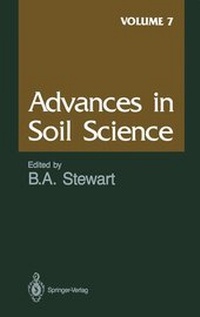
Advances in Soil Science
Springer (Publisher)
Published on 19. October 1987
Book
Hardback
IX, 228 pages
978-0-387-96551-2 (ISBN)
Description
The world population in 1950 was 2. 5 billion and is more than 5 billion today. The agriculture community, however, has responded remarkably well to meeting the increased need for food and fiber. While the population growth during this period averaged almost 2% annually, the production of grain increased at an even faster rate. From 1950 to 1973, grain production increased 3. 1% annually, but slowed to about 2% from 1973 to 1984. There fore, as a whole, the world has more grain per capita available today than ever before. Several countries that were food importers just a few years ago are food exporters today. The world carry-over stocks today are the highest in years. While the major concern just a few years ago was whether the world could produce adequate food, the problem for many countries today is how to export their surpluses. Although the world as a whole has surplus food supplies, there are millions of people without adequate food to exist, and there are additional millions who have a bare subsistence diet at best. The average daily calorie supply for the developed countries is more than 3,300 per person, while the average for the developing countries is only about 2,200. The major global food produc tion problems have shifted from Asia to Africa, where malnutrition, poverty, and starvation are attracting world attention.
More details
Other editions
Additional editions
Persons
Content
Modeling of Flow, Transport, and Crop Yield in Spatially Variable Fields.- I. Introduction.- II. Infiltration and Redistribution.- III. Solute Transport.- IV. Crop Yield.- V. Economic Optimization.- List of Symbols.- References.- Pedogenesis in the Grassland and Adjacent Forests of the Great Plains.- I. Introduction.- II. Grassland Soils as a System.- III. Classification of Grassland Soils.- IV. Soil Climates in Grasslands.- V. Pedogenic Processes.- VI. Organic Matter Formation and Transformation.- VII. Carbonate Weathering and pH.- VIII. Clay Formation and Translocation.- IX. Pedogenesis and Major Nutrients.- X. Processes in Clayey Grassland Soils.- XI. Solonetzic Soils.- XII. Soils of the Grassland Forest Ecotone.- XIII. Effects of Man and Other Organisms.- XIV. Trends in Pedological Research.- XV. Summary.- Acknowledgments.- References.- Legume Winter Cover Crops.- I. Introduction.- II. Production of Legume Winter Cover Crops.- III. Yield Responses of Summer Crops.- IV. Nitrogen from Legume Cover Crops.- V. Effects on Soil Properties.- VI. Erosion Control.- VII. Economics.- VIII. Perennial Legume Covers.- IX. Conclusions.- References.- Influence of Sludge Organic Matter on Soil Physical Properties.- I. Introduction.- II. Sludge Organic Matter Interactions with Soils.- III. Effect of Sludge Organic Matter on Soil Physical Properties.- IV. Conclusions.- Acknowledgments.- References.- Efficient Resource Management Systems for Drylands of India.- I. Introduction.- II. Soils of Drylands in India.- III. Untapped Yield Potential in Drylands of India.- IV. Cropping Systems.- V. Tillage.- VI. Mulching.- VII. Fertilizer Use.- VIII. On-Farm Rainwater Management.- IX. Runoff Collection and Recycling.- X. Stability in Crop Production in Drylands.- XI. Agro-Technology Transfer.- Acknowledgment.- References.