

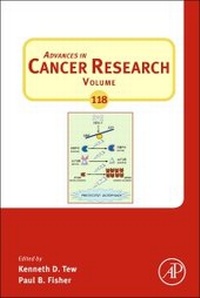
Advances in Cancer Research: Volume 118
Academic Press
Published on 31. July 2013
Book
Hardback
416 pages
978-0-12-407173-5 (ISBN)
Description
Advances in Cancer Research provides invaluable information on the exciting and fast-moving field of cancer research. Here, once again, outstanding and original reviews are presented on a variety of topics.
Reviews / Votes
Praise for the Serial"This classic and essential series presents critical overviews on select aspects of both cancer research and the basic underlying sciences." --American Scientist
"Excellent, highly informative, in-depth reviews...expertly written, up-to-date, and well-referenced." --Journal of Medicinal Chemistry
"This is a series that has a long tradition of excellence in the field of cancer biology." --Doody's Publishing Reviews
More details
Series
Language
English
Place of publication
San Diego
United States
Publishing group
Elsevier Science Publishing Co Inc
Target group
Professional and scholarly
Researchers and students in the basic and clinical sciences of cancer biology and oncology, plus related areas in genetics, immunology, pharmacology, cell biology, and molecular biology.
Dimensions
Height: 229 mm
Width: 152 mm
Weight
780 gr
ISBN-13
978-0-12-407173-5 (9780124071735)
Copyright in bibliographic data and cover images is held by Nielsen Book Services Limited or by the publishers or by their respective licensors: all rights reserved.
Schweitzer Classification
Other editions
Additional editions
Persons
Professor & Chairman, Dept of Cell & Molecular Pharmacology John C. West Chair of Cancer Research, Medical University of South Carolina, USAThe Tew laboratory maintains an interest in using redox pathways as a platform to develop therapeutic strategies through drug discovery/development and biomarker identification. We interrogate how reactive oxygen and nitrogen species (ROS/RNS) impact cancer cells and develop novel drugs that impact on glutathione based pathways. Our research efforts have been integral to studies that have identified glutathione S-transferases (GST) as important in drug resistance, catalytic detoxification and as arbiters of kinase-mediated cell signaling events. In addition, we have been instrumental in defining how GSTP contributes to the process by which cells respond to ROS by selective addition of glutathione to specific protein clusters, so called S-glutathionylation. Each of these research areas has had broad impact on a number of cancer disciplines. Moreover, we have also been seminally involved in the Phase I to III clinical testing of three oncology drugs, Telcyta, Telintra and NOV-002. Other ongoing translational efforts have produced two ongoing clinical trials to measure the effectiveness of serum S-glutathionylated serine proteinase inhibitors as possible biomarkers for exposure to hydrogen peroxide mouthwashes and radiation.
Content
1. Role of Oxidative Stress and Microenvironment in Breast Cancer Development and Progression
2. Bioengineering Strategies for Cancer Targeting
3. Advances in Understanding the Coupling of DNA Base Modifying Base Enzymes to Processes Involving Base Excision Repair
4. Recent Advances in the Treament of Prostrate Cancer Stemming from Improvements in the Biology of the Disease
5. Autophagy: Cancer's Friend or Foe
2. Bioengineering Strategies for Cancer Targeting
3. Advances in Understanding the Coupling of DNA Base Modifying Base Enzymes to Processes Involving Base Excision Repair
4. Recent Advances in the Treament of Prostrate Cancer Stemming from Improvements in the Biology of the Disease
5. Autophagy: Cancer's Friend or Foe