

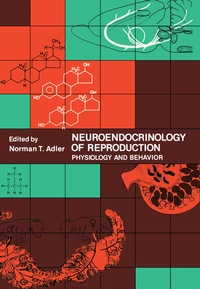
Neuroendocrinology of Reproduction
Physiology and Behavior
Published on 3. May 2012
Book
Paperback/Softback
XXII, 556 pages
978-1-4684-3883-3 (ISBN)
Description
The subject of this book is neuroendocrinology, that branch of biological science devoted to the interactions between the two major integrative organ systems of animals-the endocrine and nervous systems. Although this science today reflects a fusion of endocrinology and neurobiology, this synthetic ap proach is relatively recent. At the beginning of the 20th century, when the British physiologists, Bayliss and Starling, first proposed endocrinology to be an independent field of inquiry, they went to great lengths to establish the autonomy of chemical secretions in general and their independence from nervous control in particular (Bayliss, W. M. , and Starling, E. H. , 1902, The mechanism of pancreatic secretion,]. Physiol. 28:325). They argued with Pav lov, who said that there was a strong influence of the nervous system on the gastrointestinal phenomena the endocrinologists were studying. For several decades, the English physiologists prevailed, at least in the West; and Pavlov's critique was not taken to heart by the practitioners of the newly emerging discipline of endocrinology. Through the work of Harris, the Scharrers, Sawyer, Everett, and others, there has been something of a scientific detente in the latter half of this century; the hybrid field of neuroendocrinology is now regarded as one of the corner stones of modern neural science and is of fundamental importance in basic and clinical endocrinology.
More details
Edition
Softcover reprint of the original 1st ed. 1981
Language
English
Place of publication
New York
United States
Target group
Professional and scholarly
Research
Illustrations
XXII, 556 p.
Dimensions
Height: 244 mm
Width: 170 mm
Thickness: 32 mm
Weight
1000 gr
ISBN-13
978-1-4684-3883-3 (9781468438833)
DOI
10.1007/978-1-4684-3881-9
Schweitzer Classification
Other editions
Additional editions
E-Book
12/2012
Springer
€96.29
Available for download

Book
06/1981
Kluwer Academic/Plenum Publishers
€109.13
Article exhausted; check different version
Content
I. Chemical Background of Endocrine Function.- 1. Structure of Protein and Peptide Hormones.- 2. Histology of the Pituitary.- 3. Essentials of Steroid Structure, Nomenclature, Reactions, Biosynthesis, and Measurements.- 4. Neurotransmitter Systems: Anatomy and Pharmacology.- II. Development of Reproductive Function.- 5. Hormonal Actions on the Sexual Differentiation of the Genitalia and the Gonadotropin-Regulating Systems.- 6. Perinatal Hormones and Their Role in the Development of Sexually Dimorphic Behaviors.- 7. Early Organizational Effects of Hormones: An Evolutionary Perspective.- 8. Puberty.- III. Control of Reproduction on the Organismic and Physiological Levels of Organization.- 9. Experimental Analysis of Hormone Actions on the Hypothalamus, Anterior Pituitary, and Ovary.- 10. Estrous Cyclicity in Mammals.- 11. How the Brain Mediates Ovarian Responses to Environmental Stimuli: Neuroanatomy and Neurophysiology.- 12 Seasonal Reproduction: Photoperiodism and Biological Clocks.- IV. Control of Reproduction on the Cellular and Chemical Level.- 13. CNS Control of the Pituitary: Neurochemistry of Hypothalamic Releasing and Inhibitory Hormones.- 14. The Neurochemical Control of Mating Behavior.- 15. Cellular Biochemistry of Hormone Action in Brain and Pituitary.- 16. Autoradiographic Technique for Steroid Hormone Localization: Application to the Vertebrate Brain.- 17. Electrophysiological Effects of Steroid Hormones in Brain Tissue.- Appendix: A Gross Anatomical Study of the Peripheral Nerves Associated with Reproductive Function in the Female Albino Rat.- I. Introduction.- II. Methods.- III. Results.- A. Femoral Nerve.- B. Genitofemoral Nerve.- C. Pelvic and Hypogastric Nerves.- D. Pudendal and Caudal Cutaneous Femoral Nerves.- References.