

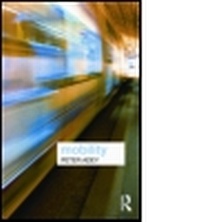
Mobility
1st Edition
Published on 14. July 2009
Book
Paperback/Softback
288 pages
978-0-415-43400-3 (ISBN)
Description
As everything from immigration, airport security and road tolling become headline news, the need to understand mobility has never been more pertinent. Yet `mobility' remains remarkably elusive in summary and definition. This introductory text makes `mobility' tangible by explaining the key theories and writings that surround it. This book traces out the concept of mobility as a key idea within the discipline of geography as well as subject areas from the wider arts and social sciences.
The text takes an interdisciplinary approach to draw upon key writers and thinkers that have contributed to the topic. In analyzing these, it develops an understanding of mobility as a relationship through which the world is lived and understood. Mobility is organized around themed chapters discussing - 'Meanings', 'Politics', 'Practices' and 'Mediations', and the book identifies the evolution of mobility and its implications for theoretical debate. These include the way we think about travel and embodiment, to regarding issues such as power, feminism and post-colonialism. Important contemporary case-studies are showcased in boxes. Examples range from the mobility politics evident in the evacuation of the flooding of New Orleans, xenophobia in Southern Africa, motoring in India, to the new social relationships emerging from the mobile phone. The methodological quandaries mobility demands are addressed through highlighted boxes discussing both qualitative and quantitative research methods.
Arguing for a more relational notion of the term, the book understands mobility as a keystone to the examination of issues from migration, war and transportation; from communications and politics to disability rights and security. Key concept and case-study boxes, further readings, and central issue discussions allow students to grasp the central importance of `mobility' to social, cultural, political, economic and everyday terrains. The text also assists scholars of Geography, Sociology, Cultural Studies, Planning, and Political Science to understand and engage with this evasive concept.
The text takes an interdisciplinary approach to draw upon key writers and thinkers that have contributed to the topic. In analyzing these, it develops an understanding of mobility as a relationship through which the world is lived and understood. Mobility is organized around themed chapters discussing - 'Meanings', 'Politics', 'Practices' and 'Mediations', and the book identifies the evolution of mobility and its implications for theoretical debate. These include the way we think about travel and embodiment, to regarding issues such as power, feminism and post-colonialism. Important contemporary case-studies are showcased in boxes. Examples range from the mobility politics evident in the evacuation of the flooding of New Orleans, xenophobia in Southern Africa, motoring in India, to the new social relationships emerging from the mobile phone. The methodological quandaries mobility demands are addressed through highlighted boxes discussing both qualitative and quantitative research methods.
Arguing for a more relational notion of the term, the book understands mobility as a keystone to the examination of issues from migration, war and transportation; from communications and politics to disability rights and security. Key concept and case-study boxes, further readings, and central issue discussions allow students to grasp the central importance of `mobility' to social, cultural, political, economic and everyday terrains. The text also assists scholars of Geography, Sociology, Cultural Studies, Planning, and Political Science to understand and engage with this evasive concept.
Reviews / Votes
"A central strength of this book is its emphasis on the need for the study of mobilities to be a multidisciplinary exercise. It is not often that I am tempted to read a book from cover to cover in a single day, but this has proved to be one such occasion." - Professor A. G. Champion, Newcastle University, UK"Mobilities is a wonderful introduction to the growing literature within human geography, sociology, urban studies, and anthropology that takes seriously the fact that we live in a world that is a constant hum of motion. This is a book that provides a thorough overview of the recent `mobility-turn' in the social sciences, a book that is both highly readable and intellectually challenging." - Dr. Alan Latham, University College London, UK
More details
Series
Language
English
Place of publication
London
United Kingdom
Publishing group
Taylor & Francis Ltd
Target group
College/higher education
Product notice
Paperback (UK-B)
Illustrations
16 s/w Abbildungen, 7 s/w Photographien bzw. Rasterbilder, 9 s/w Zeichnungen
9 Line drawings, black and white; 7 Halftones, black and white; 16 Illustrations, black and white
Dimensions
Height: 216 mm
Width: 138 mm
Weight
363 gr
ISBN-13
978-0-415-43400-3 (9780415434003)
Copyright in bibliographic data and cover images is held by Nielsen Book Services Limited or by the publishers or by their respective licensors: all rights reserved.
Schweitzer Classification
Other editions
Person
Peter Adey is Lecturer in Cultural Geography at Keele University. His research interests concern the intersecting cultures of mobility, security, design and air-travel. His next book Aerial Geographies is forthcoming in 2010.
Content
1. Introduction 2. Meaning 3. Politics 4. Practices 5. Mediations 6. Conclusion