

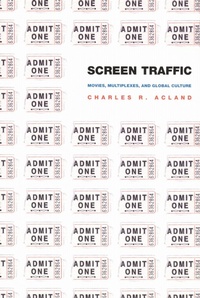
Screen Traffic
Movies, Multiplexes, and Global Culture
Will be published approx. on 13. November 2003
Book
Hardback
352 pages
978-0-8223-3175-9 (ISBN)
Description
In Screen Traffic, Charles R. Acland examines how, since the mid-1980s, the U.S. commercial movie business has altered conceptions of moviegoing both within the industry and among audiences. He shows how studios, in their increasing reliance on revenues from international audiences and from the ancillary markets of television, videotape, DVD, and pay-per-view, have cultivated an understanding of their commodities as mutating global products. Consequently, the cultural practice of moviegoing has changed significantly, as has the place of the cinema in relation to other sites of leisure.Integrating film and cultural theory with close analysis of promotional materials, entertainment news, trade publications, and economic reports, Acland presents an array of evidence for the new understanding of movies and moviegoing that has developed within popular culture and the entertainment industry. In particular, he dissects a key development: the rise of the megaplex, characterized by large auditoriums, plentiful screens, and consumer activities other than film viewing. He traces its genesis from the re-entry of studios into the movie exhibition business in 1986 through 1998, when reports of the economic destabilization of exhibition began to surface, just as the rise of so-called e-cinema signaled another wave of change. Documenting the current tendency toward an accelerated cinema culture, one that appears to arrive simultaneously for everyone, everywhere, Screen Traffic unearths and critiques the corporate and cultural forces contributing to the "felt internationalism" of our global era.
Reviews / Votes
"Drawing upon economic data, promotional material, fandom, and the trade press, Charles R. Acland takes his study of contemporary cinema culture into the busy intersection of debates about post-national and post-cinematic audiences. Acland assesses the cross-marketed media landscape-megaplexes, television, videotapes, DVDs, fast-food, music, and the web-and deftly maps the global consequences of traffic across these new forms of mobilized visuality."-Anne Friedberg, University of Southern California "We need a book about global audiences that is smart about theory and chock-full of facts. Charles R. Acland has delivered one, an incisive blend of cultural and cinema studies. Buy it, get it, plunder it!"-Toby Miller, coauthor of Global HollywoodMore details
Language
English
Place of publication
North Carolina
United States
Target group
Professional and scholarly
Product notice
Cloth over boards
Illustrations
16 illus., 34 tables
Dimensions
Height: 236 mm
Width: 160 mm
Thickness: 28 mm
Weight
612 gr
ISBN-13
978-0-8223-3175-9 (9780822331759)
Copyright in bibliographic data and cover images is held by Nielsen Book Services Limited or by the publishers or by their respective licensors: all rights reserved.
Schweitzer Classification
Other editions
Additional editions
E-Book
11/2003
1st Edition
De Gruyter
€208.99
Available for download
Person
Charles R. Acland is Associate Professor of Communications Studies at Concordia University, Montreal. He is the author of Youth, Murder, Spectacle: The Cultural Politics of "Youth in Crisis" and coeditor of Harold Innis in the New Century: Reflections and Refractions.
Content
List of Tables and Figures vii
Acknowledgments ix
I. Theorizing Contemporary Cinemagoing
1. Global Alliances and the Current Cinema 3
2. Traveling Cultures, Mutating Commodities 23
3. Matinees, Summers, and the Practice of Cinemagoing 45
II. Structures of Cinematic Experience
4. Crisis and Settlement in Exhibition and Distribution 85
5. "Here Come the Megaplexes" 107
6. Zones and Speeds of International Cinematic Life 130
7. Northern Screens 163
8. The Miniaturization of the Theme Park, or After the "Death" of Cinema 196
9. Cinemagoing as "Felt Internationalism" 229
Appendices
1. Screens per Million Population 247
2. World Screen Count 250
3. National Average Cinema Admissions per Person (annual) 253
4. Multiplexing in Europe 256
5. MPAA's Goals for Digital Cinema 257
6. Existing Digital Cinemas, 2000 259
7. Digital Movies Released for DLP Projectors 261
Notes 263
Bibliography 299
Index 325
Acknowledgments ix
I. Theorizing Contemporary Cinemagoing
1. Global Alliances and the Current Cinema 3
2. Traveling Cultures, Mutating Commodities 23
3. Matinees, Summers, and the Practice of Cinemagoing 45
II. Structures of Cinematic Experience
4. Crisis and Settlement in Exhibition and Distribution 85
5. "Here Come the Megaplexes" 107
6. Zones and Speeds of International Cinematic Life 130
7. Northern Screens 163
8. The Miniaturization of the Theme Park, or After the "Death" of Cinema 196
9. Cinemagoing as "Felt Internationalism" 229
Appendices
1. Screens per Million Population 247
2. World Screen Count 250
3. National Average Cinema Admissions per Person (annual) 253
4. Multiplexing in Europe 256
5. MPAA's Goals for Digital Cinema 257
6. Existing Digital Cinemas, 2000 259
7. Digital Movies Released for DLP Projectors 261
Notes 263
Bibliography 299
Index 325