

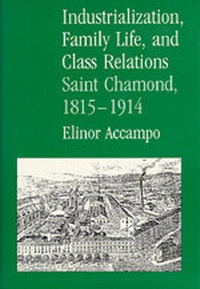
Industrialization, Family Life, and Class Relations
Saint Chamond, 1815-1914
Published on 11. April 1989
Book
Hardback
320 pages
978-0-520-06095-1 (ISBN)
Description
In this provocative study, Elinor Accampo explores the interrelationship between the structure of work and strategies of family formation in Saint Chamond, a French city that underwent intensive industrialization during the nineteenth century. Through a detailed analysis of fertility, mortality, marriages, and migration, the author analyzes the ways in which the family responded to changes in the organization of work. In the first half of the nineteenth century work was in the home, and families tended to be large in order to meet the demand for workers. But by the 1860s the mechanization of labor had begun to separate family life and work life, fundamentally transforming the relationship between work and family and making the survival of the working-class family more difficult. Accampo argues that workers began to have smaller families much earlier than has previously been suggested, and she demonstrates that fertility declined for reasons unique to working-class conditions. This decline in family size, and the context in which it took place, provides fascinating new material for understanding the working class world and the dynamics of class relations.
More details
Language
English
Place of publication
Berkerley
United States
Target group
College/higher education
Professional and scholarly
Product notice
Cloth over boards
Weight
771 gr
ISBN-13
978-0-520-06095-1 (9780520060951)
Copyright in bibliographic data and cover images is held by Nielsen Book Services Limited or by the publishers or by their respective licensors: all rights reserved.
Schweitzer Classification
Person
Elinor Accampo is Assistant Professor of History at the University of Southern California.