

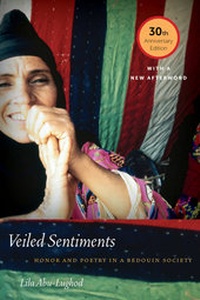
Veiled Sentiments
Honor and Poetry in a Bedouin Society
1st Edition
Published on 6. September 2016
Book
Paperback/Softback
384 pages
978-0-520-29249-9 (ISBN)
Description
First published in 1986, Lila Abu-Lughod's Veiled Sentiments has become a classic ethnography in the field of anthropology. During the late 1970s and early 1980s, Abu-Lughod lived with a community of Bedouins in the Western Desert of Egypt for nearly two years, studying gender relations, morality, and the oral lyric poetry through which women and young men express personal feelings. The poems are haunting, the evocation of emotional life vivid. But Abu-Lughod's analysis also reveals how deeply implicated poetry and sentiment are in the play of power and the maintenance of social hierarchy. What begins as a puzzle about a single poetic genre becomes a reflection on the politics of sentiment and the complexity of culture. This thirtieth anniversary edition includes a new afterword that reflects on developments both in anthropology and in the lives of this community of Awlad 'Ali Bedouins, who find themselves increasingly enmeshed in national political and social formations. The afterword ends with a personal meditation on the meaning-for all involved-of the radical experience of anthropological fieldwork and the responsibilities it entails for ethnographers.
Reviews / Votes
"A foundational text for the subfields of literary anthropology and the anthropology of women in the Middle East." * Journal of Anthropological Research * "Veiled Sentiments is an excellent study, thorough, meticulous, and stimulating, of the highly complex social system of these tribes, with particular emphasis on male-female relationships and on the intriguing, often paradoxical roles played by men and women to preserve this system." * Arab Studies Quarterly * "This book is a beautiful account of a lifetime of shared 'ishra or moments between Abu-Lughod and the Awald 'Ali Bedouins. Anthropology often looks at "the other", but by representing the emotional dialectics between the informant and the researcher over time, what this book reveals is the impact fieldwork has on the anthropologist." * Journal of the Anthropological Society of Oxford * "The republication makes an important classic study better available for new generations of readers and offers some new material for those already familiar with it, as well as providing the author's own commentary on her earlier work." * Islam and Christian-Muslim Relations *More details
Language
English
Place of publication
Berkerley
United States
Target group
College/higher education
Product notice
Paperback (trade)
Illustrations
19 b-w images, 1 map
Dimensions
Height: 229 mm
Width: 152 mm
Thickness: 23 mm
Weight
590 gr
ISBN-13
978-0-520-29249-9 (9780520292499)
Copyright in bibliographic data and cover images is held by Nielsen Book Services Limited or by the publishers or by their respective licensors: all rights reserved.
Schweitzer Classification
Other editions
Additional editions
E-Book
09/2016
1st Edition
University of California Press
€15.49
Available for download
Person
Lila Abu-Lughod is Joseph L. Buttenwieser Professor of Social Science at Columbia University, where she teaches anthropology and gender studies. She is the author of Writing Women's Worlds: Bedouin Stories, Dramas of Nationhood: The Politics of Television in Egypt, and Do Muslim Women Need Saving?
Content
Acknowledgments
A Note on Transcriptions
One: Guest and Daughter
The Community
Fieldwork
Poetry and Sentiment
PART ONE
The Ideology of Bedouin Social Life
Two: Identity in Relationship
Asl: The Blood of Ancestry
Garaba: The Blood of Relationship
Maternal Ties and a Common Life
Identification and Sharing
Identity in a Changing World
Three: Honor and the Virtues of Autonomy
Autonomy and Hierarchy
The Family Model of Hierarchy
Honor: The Moral Basis of Hierarchy
Limits on Power
Hasham: Honor of the Weak
Four: Modesty, Gender, and Sexuality
Gender Ideology and Hierarchy
The Social Value of Male and Female
The "Natural" Bases of Female Moral
Inferiority
Red Belts and Black Veils: The Symbolism of Gender and Sexuality
Sexuality and the Social Order
Hasham Reconsidered: Deference and the Denial of Sexuality
The Meaning of Veiling
PART TWO
Discourses on Sentiment
Five: The Poetry of Personal Life
On Poetry in Context
The Poetry of Self and Sentiment
Six: Honor and Poetic Vulnerability
Discourses on Loss
Matters of Pride
Responding to Death
The Discourse of Honor
Seven: Modesty and the Poetry of Love
Discourses on Love
Star-Crossed Lovers
An Arranged Marriage
Marriage, Divorce, and Polygyny
Eight: Ideology and the Politics of Sentiment
The Social Contexts of Discourse
Protective Veils of Form
The Meaning of Poetry
The Politics of Sentiment
Ideology and Experience
Ethnography's Values: An Afterword
Appendix: Formulas and Themes of the Ghinnawa
Notes
Bibliography
Index
A Note on Transcriptions
One: Guest and Daughter
The Community
Fieldwork
Poetry and Sentiment
PART ONE
The Ideology of Bedouin Social Life
Two: Identity in Relationship
Asl: The Blood of Ancestry
Garaba: The Blood of Relationship
Maternal Ties and a Common Life
Identification and Sharing
Identity in a Changing World
Three: Honor and the Virtues of Autonomy
Autonomy and Hierarchy
The Family Model of Hierarchy
Honor: The Moral Basis of Hierarchy
Limits on Power
Hasham: Honor of the Weak
Four: Modesty, Gender, and Sexuality
Gender Ideology and Hierarchy
The Social Value of Male and Female
The "Natural" Bases of Female Moral
Inferiority
Red Belts and Black Veils: The Symbolism of Gender and Sexuality
Sexuality and the Social Order
Hasham Reconsidered: Deference and the Denial of Sexuality
The Meaning of Veiling
PART TWO
Discourses on Sentiment
Five: The Poetry of Personal Life
On Poetry in Context
The Poetry of Self and Sentiment
Six: Honor and Poetic Vulnerability
Discourses on Loss
Matters of Pride
Responding to Death
The Discourse of Honor
Seven: Modesty and the Poetry of Love
Discourses on Love
Star-Crossed Lovers
An Arranged Marriage
Marriage, Divorce, and Polygyny
Eight: Ideology and the Politics of Sentiment
The Social Contexts of Discourse
Protective Veils of Form
The Meaning of Poetry
The Politics of Sentiment
Ideology and Experience
Ethnography's Values: An Afterword
Appendix: Formulas and Themes of the Ghinnawa
Notes
Bibliography
Index