

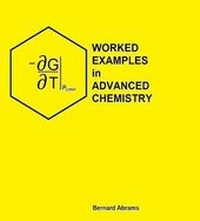
Worked Examples in Advanced Chemistry
Published on 2. September 2019
Book
Paperback/Softback
55 pages
978-1-5262-0801-9 (ISBN)
Description
This book occupies the space between a set of lecture notes and a set of examination past papers. As a result, in terms of appearance and content it resembles both.
Covering inorganic, organic, physical and theoretical chemistry, the material spans common ground in undergraduate chemistry where experience has seen queries arise relatively frequently when supporting students who are engaging with the subject at that level.
It offers an authentic match with tutorial or supervision output using an A4 manuscript facsimile format (with typescript foreword, contents and index) clearly intended to teach rather than test by utilising the worked example effect.
Should any material be unfamiliar, sufficient prompting is available to enthusiastic students of this fascinating subject to facilitate background research using the solutions as a guide.
There are 50 questions written with the aim of smoothing transitions into and out of first-year degree level chemistry, in which students are presented with worked solutions including faded sets (worked example effect, cognitive load theory) as well as individual questions structured to prompt self-explanation.
The author first taught undergraduate chemistry over thirty years ago and has tutored students of natural sciences and social sciences at bachelor's and master's levels in a variety of role since then. His chemistry background includes experience gained as a college supervisor and university demonstrator
Covering inorganic, organic, physical and theoretical chemistry, the material spans common ground in undergraduate chemistry where experience has seen queries arise relatively frequently when supporting students who are engaging with the subject at that level.
It offers an authentic match with tutorial or supervision output using an A4 manuscript facsimile format (with typescript foreword, contents and index) clearly intended to teach rather than test by utilising the worked example effect.
Should any material be unfamiliar, sufficient prompting is available to enthusiastic students of this fascinating subject to facilitate background research using the solutions as a guide.
There are 50 questions written with the aim of smoothing transitions into and out of first-year degree level chemistry, in which students are presented with worked solutions including faded sets (worked example effect, cognitive load theory) as well as individual questions structured to prompt self-explanation.
The author first taught undergraduate chemistry over thirty years ago and has tutored students of natural sciences and social sciences at bachelor's and master's levels in a variety of role since then. His chemistry background includes experience gained as a college supervisor and university demonstrator
More details
Language
English
Place of publication
United Kingdom
Target group
College/higher education
Dimensions
Height: 295 mm
Width: 210 mm
ISBN-13
978-1-5262-0801-9 (9781526208019)
Copyright in bibliographic data and cover images is held by Nielsen Book Services Limited or by the publishers or by their respective licensors: all rights reserved.
Schweitzer Classification
Content
Foreword
Data
Contents
PHYSICAL CHEMISTRY
ORGANIC CHEMISTRY
QUANTUM CHEMISTRY & SPECTROSCOPY
INORGANIC CHEMISTRY
Index
Data
Contents
PHYSICAL CHEMISTRY
ORGANIC CHEMISTRY
QUANTUM CHEMISTRY & SPECTROSCOPY
INORGANIC CHEMISTRY
Index