

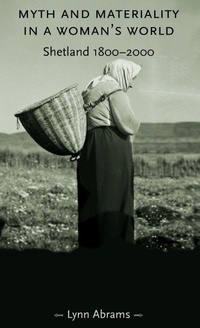
Myth and Materiality in a Woman's World
Shetland 1800-2000
Published on 10. November 2005
Book
Hardback
264 pages
978-0-7190-6592-7 (ISBN)
Description
Shetland has a history unique in Europe, for over the past two centuries it was a place where women dominated the family, economy, and the cultural imagination. Women ran households and crofts without men. They maintained families and communities because men were absent. And they constructed in their minds an identity of themselves as 'liberated' long before organised feminism was invented. And yet, Shetland is a place which was made by the most masculine of societies - those of the Picts, Scots and above all the Vikings - and its contemporary identity still draws on the heroic exploits and sagas of medieval Norsemen. This book examines how against this tradition Shetland became a female place, and offers answers as to how, in this most isolated island community, the inhabitants transgressed and reversed their traditional gender roles. Reconstructing this 'woman's world' from fragments of cultural experience captured in written and oral sources, this book will appeal to scholars in the fields of social and cultural history, social anthropology, gender and women's studies. -- .
More details
Series
Language
English
Place of publication
Manchester
United Kingdom
Target group
College/higher education
Professional and scholarly
Dimensions
Height: 222 mm
Width: 145 mm
Thickness: 18 mm
Weight
470 gr
ISBN-13
978-0-7190-6592-7 (9780719065927)
Copyright in bibliographic data and cover images is held by Nielsen Book Services Limited or by the publishers or by their respective licensors: all rights reserved.
Schweitzer Classification
Other editions
Additional editions
E-Book
07/2013
1st Edition
Manchester University Press
€24.49
Available for download
Person
Lynn Abrams is Professor of Gender History at the University of Glasgow
Content
List of tables and figures; List of Illustrations; Glossary; Note on Shetland dialect; Map; Preface and acknowledgements; 1. Pasts, peoples, selves; 2. Stories; 3. Place; 4. Work; 5. Culture; 6. Sexualities; 7. Power; 8. Reflections; Bibliography; Index