


Practical Authority
Agency and Institutional Change in Brazilian Water Politics
Published on 19. September 2013
Book
Paperback/Softback
288 pages
978-0-19-998527-2 (ISBN)
Description
New institutions don't come into being by themselves: They have to be organized. On the basis of research from a decade-long, multi-site study of efforts to transform freshwater management in Brazil, Practical Authority asks how new institutional arrangements established by law become operational in practice. The book explores how this happens by putting both agency and structures in motion. It looks at what actors in complex policy environments actually do to get new institutions off the ground. New configurations of authority in a policy area very often have to be produced relationally, on the ground, in practice. New organizations have to acquire problem-solving capabilities and recognition from others, what the authors call "practical authority."
The story told here has a multiplicity of protagonists, many of whom are normally invisible in political studies, such as the state officials and university professors who struggled to move water reform forward. The book explores the interaction between their efforts to influence the design and passage of new legislation and the hard labor of creating the new water management organizations the laws called for. It follows three decades of law making at the national and state level and examines the creation of sixteen river basin committees throughout the country. By bringing together state and society actors around territorially specific problems, these committees were expected to promote a new vision of integrated water management. But none of the ones examined here followed the trajectory their organizers expected. Some adapted creatively to challenges, circumventing roadblocks encountered along the way; others never got off the ground. Rather than explain these differences on the basis of the varying conditions actors faced, the authors propose a focus on the process, and practice, of institution building.
The story told here has a multiplicity of protagonists, many of whom are normally invisible in political studies, such as the state officials and university professors who struggled to move water reform forward. The book explores the interaction between their efforts to influence the design and passage of new legislation and the hard labor of creating the new water management organizations the laws called for. It follows three decades of law making at the national and state level and examines the creation of sixteen river basin committees throughout the country. By bringing together state and society actors around territorially specific problems, these committees were expected to promote a new vision of integrated water management. But none of the ones examined here followed the trajectory their organizers expected. Some adapted creatively to challenges, circumventing roadblocks encountered along the way; others never got off the ground. Rather than explain these differences on the basis of the varying conditions actors faced, the authors propose a focus on the process, and practice, of institution building.
Reviews / Votes
Abers and Keck draw on a decade of research in Brazil to conceptualize policy formalization as a social experiment in building capacity and authority. Their account weaves together extensive national surveys and intensive case studies ... their investigation yields important clues about the nature of democracy building in the Americas. * Katie Meehan, Latin American Research Review * Practical Authority is simply an outstanding and tremendously important work. It can be expected to quickly become the basis for a great deal more research in environmental policy and natural resource management, and I expect it will also become the foundation for new fieldwork in a variety of areas in political science and political economy. * Alfred P. Montero, Latin American Studies *More details
Language
English
Place of publication
New York
United States
Target group
College/higher education
Professional and scholarly
Dimensions
Height: 234 mm
Width: 156 mm
Thickness: 17 mm
Weight
494 gr
ISBN-13
978-0-19-998527-2 (9780199985272)
Copyright in bibliographic data and cover images is held by Nielsen Book Services Limited or by the publishers or by their respective licensors: all rights reserved.
Schweitzer Classification
Other editions
Additional editions
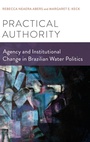
Rebecca Neaera Abers | Margaret E. Keck
Practical Authority
Agency and Institutional Change in Brazilian Water Politics
Book
09/2013
Oxford University Press Inc
€210.70
Shipment within 15-20 days
Rebecca Neaera Abers | Margaret E. Keck
Practical Authority
Agency and Institutional Change in Brazilian Water Politics
E-Book
08/2013
1st Edition
OUP eBook
€19.99
Available for download
Persons
RA: Adjunct Professor, Institute of Political Science, University of BrasiliaMK: Professor of Political Science, Johns Hopkins University
Content
Acknowledgements ; Abbreviations ; Prologue ; Chapter 1 - Practical Authority, Institution-building, and Entanglement ; Chapter 2 - Entangled Institutions and Layered Reform Narratives: Governing Water Resources in Historical Context ; Chapter 3 - Institutional Design in Entangled Settings: How to Make an Unfinished Law ; Chapter 4 -Practicing Laws: Experiments with Institution Building ; Chapter 5 - Becoming Committees: Diversity, Problems and Processes ; Chapter 6 - Diversions of Authority: Power, Perseverance and Struggles over the Control of Water Resources ; Chapter 7 - Building Practical Authority from Outside the State ; Conclusions ; Appendix 1: Methodological Narrative ; Appendix 2: List of interviews ; References