

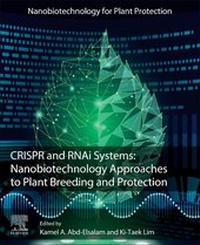
CRISPR and RNAi Systems
Nanobiotechnology Approaches to Plant Breeding and Protection
Published on 2. March 2021
Book
Paperback/Softback
840 pages
978-0-12-821910-2 (ISBN)
Description
Plants are vulnerable to pathogens including fungi, bacteria, and viruses, which cause critical problems and deficits. Crop protection by plant breeding delivers a promising solution with no obvious effect on human health or the local ecosystem. Crop improvement has been the most powerful approach for producing unique crop cultivars since domestication occurred, making possible the main innovations in feeding the globe and community development. Genome editing is one of the genetic devices that can be implemented, and disease resistance is frequently cited as the most encouraging application of CRISPR/Cas9 technology in agriculture. Nanobiotechnology has harnessed the power of genome editing to develop agricultural crops. Nanosized DNA or RNA nanotechnology approaches could contribute to raising the stability and performance of CRISPR guide RNAs. This book brings together the latest research in these areas.
CRISPR and RNAi Systems: Nanobiotechnology Approaches to Plant Breeding and Protection presents a complete understanding of the RNAi and CRISPR/Cas9 techniques for controlling mycotoxins, fighting plant nematodes, and detecting plant pathogens. CRISPR/Cas genome editing enables efficient targeted modification in most crops, thus promising to accelerate crop improvement. CRISPR/Cas9 can be used for management of plant insects, and various plant pathogens. The book is an important reference source for both plant scientists and environmental scientists who want to understand how nano biotechnologically based approaches are being used to create more efficient plant protection and plant breeding systems.
CRISPR and RNAi Systems: Nanobiotechnology Approaches to Plant Breeding and Protection presents a complete understanding of the RNAi and CRISPR/Cas9 techniques for controlling mycotoxins, fighting plant nematodes, and detecting plant pathogens. CRISPR/Cas genome editing enables efficient targeted modification in most crops, thus promising to accelerate crop improvement. CRISPR/Cas9 can be used for management of plant insects, and various plant pathogens. The book is an important reference source for both plant scientists and environmental scientists who want to understand how nano biotechnologically based approaches are being used to create more efficient plant protection and plant breeding systems.
More details
Series
Language
English
Place of publication
United States
Target group
Professional and scholarly
Dimensions
Height: 235 mm
Width: 191 mm
Weight
1770 gr
ISBN-13
978-0-12-821910-2 (9780128219102)
Copyright in bibliographic data and cover images is held by Nielsen Book Services Limited or by the publishers or by their respective licensors: all rights reserved.
Schweitzer Classification
Other editions
Additional editions
Kamel A. Abd-Elsalam | Ki-Taek Lim
CRISPR and RNAi Systems
Nanobiotechnology Approaches to Plant Breeding and Protection
E-Book
02/2021
Elsevier
€220.00
Available for download
Persons
Prof. Kamel A. Abd-Elsalam, Ph.D., is currently a research professor at the Plant Pathology Research Institute, Agricultural Research Center, Giza. Kamel earned his Ph.D. in Molecular Plant Pathology from Christian Alberchts University of Kiel (Germany) and Suez Canal University (Egypt). Dr. Kamel's research interests include developing, improving, and deploying plant biosecurity diagnostic tools; understanding and exploiting fungal pathogen genomes; and developing eco-friendly hybrid nanomaterials for controlling toxicogenic fungi, plant diseases, and agroecosystems applications. He published 20 books related to nano-biotechnology applications in agriculture and plant protection. Since 2019, he has served as the Editor-in-Chief of the Elsevier book series "Nanobiotechnology for Plant Protection.? He also serves as the Series Editor of the Elsevier book series "Genome Modified Plants and Microbes in Food and Agriculture.? Ki-Taek Lim is Assistant Professor, Department of Biosystems Engineering, Kangwon National University, South Korea. His research focuses on biosystems engineering.
Content
1. Can CRISPRized crops save the global food supply?
2. RNAi/CRISPR based system: Targeted genome engineering for insects control
3. CRISPR/Cas9 regulations in plant science
4. Are CRISPR/Cas9 and RNAi-based new technologies to relocate crop pesticides?
5. CRISPR-Cas epigenome editing technology: improving crop resistance to pathogens
6. CRISPR System for the development of disease-resistance in horticulture crops
7. CRISPR and RNAi technology for crop improvements in the developing countries
8. CRISPR/Cas9 applications for virus resistance
9. Current Trends and Recent Progress of Genetic Engineering in Genus Phytophthora using CRISPR Systems
10. CRISPR/Cas 9 and Cas13a Systems: a promising tool for plant breeding
11. CRISPR/Cas techniques: a new method for RNA interference in cereals
12. Different ways of wheat genetic transformation for efficient genome editing
13. CRISPR-Cas for genome editing in Cotton
14. Wheat Starch via CRISPR System: Biosynthesis and Regulatory Pathways
15. Role of CRISPR/Cas system in altering phenolics and carotenoids biosynthesis for plants defense
16. Fungal Genome Editing Using CRISPR-Cas Nucleases: A New Tool for the Management of Plant Diseases
17. CRISPR-Cas systems as antimicrobial agents for agri-food pathogens.
18. CRISPR Interference System: A potential strategy to inhibit pathogenic biofilm in agri-food sector
19. Patenting Dynamics in CRISPR gene editing technologies
20. Tricks and trends in CRISPR/Cas9-based genome editing and use of bioinformatics tools for improving on-target efficiency
21. RNAi and CRISPR/Cas9 techniques for controlling mycotoxins
22. Role of Small RNA and RNAi Technology Towards Improvement of Abiotic Stress Tolerance in Plants
23. RNAi based system a new tool for insects' control
24. RNAi strategy for management of phytopathogenic fungi
25. CRISPR applications in plant bacteriology: today and future perspectives
26. RNAi-based gene silencing in plant parasitic nematodes: A road towards crop improvement
27. RNAi mediated viral disease resistance in crop plants
28. Phytoalexin biosynthesis through RNAi for disease resistance
29. POLYMER AND LIPID-BASED NANOPARTICLES TO DELIVER RNAi AND CRISPR SYSTEMS
30. Inorganic Smart Nanoparticles: New Tool to Deliver CRISPR systems into Plant Cells
31. Regulatory aspects, risk assessment, and toxicity associated with RNAi and CRISPR methods
32. Gene editing in oomycetes and filamentous fungi using CRISPR-Cas technology
33. CRISPR-Cas technology towards improvement of abiotic stress tolerance in plants
34. Databases and Bioinformatics Tools for Genome Engineering in Plants using RNA interference
2. RNAi/CRISPR based system: Targeted genome engineering for insects control
3. CRISPR/Cas9 regulations in plant science
4. Are CRISPR/Cas9 and RNAi-based new technologies to relocate crop pesticides?
5. CRISPR-Cas epigenome editing technology: improving crop resistance to pathogens
6. CRISPR System for the development of disease-resistance in horticulture crops
7. CRISPR and RNAi technology for crop improvements in the developing countries
8. CRISPR/Cas9 applications for virus resistance
9. Current Trends and Recent Progress of Genetic Engineering in Genus Phytophthora using CRISPR Systems
10. CRISPR/Cas 9 and Cas13a Systems: a promising tool for plant breeding
11. CRISPR/Cas techniques: a new method for RNA interference in cereals
12. Different ways of wheat genetic transformation for efficient genome editing
13. CRISPR-Cas for genome editing in Cotton
14. Wheat Starch via CRISPR System: Biosynthesis and Regulatory Pathways
15. Role of CRISPR/Cas system in altering phenolics and carotenoids biosynthesis for plants defense
16. Fungal Genome Editing Using CRISPR-Cas Nucleases: A New Tool for the Management of Plant Diseases
17. CRISPR-Cas systems as antimicrobial agents for agri-food pathogens.
18. CRISPR Interference System: A potential strategy to inhibit pathogenic biofilm in agri-food sector
19. Patenting Dynamics in CRISPR gene editing technologies
20. Tricks and trends in CRISPR/Cas9-based genome editing and use of bioinformatics tools for improving on-target efficiency
21. RNAi and CRISPR/Cas9 techniques for controlling mycotoxins
22. Role of Small RNA and RNAi Technology Towards Improvement of Abiotic Stress Tolerance in Plants
23. RNAi based system a new tool for insects' control
24. RNAi strategy for management of phytopathogenic fungi
25. CRISPR applications in plant bacteriology: today and future perspectives
26. RNAi-based gene silencing in plant parasitic nematodes: A road towards crop improvement
27. RNAi mediated viral disease resistance in crop plants
28. Phytoalexin biosynthesis through RNAi for disease resistance
29. POLYMER AND LIPID-BASED NANOPARTICLES TO DELIVER RNAi AND CRISPR SYSTEMS
30. Inorganic Smart Nanoparticles: New Tool to Deliver CRISPR systems into Plant Cells
31. Regulatory aspects, risk assessment, and toxicity associated with RNAi and CRISPR methods
32. Gene editing in oomycetes and filamentous fungi using CRISPR-Cas technology
33. CRISPR-Cas technology towards improvement of abiotic stress tolerance in plants
34. Databases and Bioinformatics Tools for Genome Engineering in Plants using RNA interference