


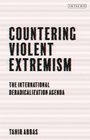
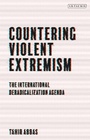
Countering Violent Extremism
The International Deradicalization Agenda
Published on 20. May 2021
Book
Paperback/Softback
232 pages
978-1-78831-069-7 (ISBN)
Description
Terrorism, radicalization and violent extremism dominate sociological, political and cultural concerns in today's polarized social and political world. However, the role of governments and issues relating to state terrorism and the counter-terror state remain important considerations. This book presents an understanding of the concept of Countering Violent Extremism from a critical terrorism studies perspective using case studies from different countries while examining the issues it raises. Extremism and violence do not emerge in a vacuum - nor do the policies that counter these concerns. There are no simple solutions to violent extremism but the fixation on ideology can do more harm than good.
Reviews / Votes
A wide-ranging and provocative treatment of political violence today. Countering Violent Extremism not only provides researchers with a set of critical resources through which to interrogate dominant conceptions of extremism and terrorism. It also offers practitioners an important set of tools with which to situate and address diverse forms of violence. The book deserves the wide audience it will no doubt receive. * Lee Jarvis, Professor of International Politics and Research Director, University of East Anglia, UK * Countering Violent Extremism: The International Deradicalization Agenda provides a deeply insightful overview - and trenchant critique - of the contemporary terrorism and de-radicalisation field. I was particularly impressed with the clear and concise but always sophisticated analysis of this complex and often perplexing subject, and the simple but profound conclusions it draws about responding to political violence. A fine example of applied critical thinking and research-informed analysis, it should be required reading for everyone involved in the de-radicalisation field, whether as researchers or practitioners. * Richard Jackson, University of Otago, New Zealand * Challenging the status quo is as crucial for CVE as it is for global security, especially when considering that the status quo can lead to ignoring or misrepresenting the underlying causes of terrorism and extremism. This book is a welcome departure from stagnant CVE evaluations that contribute to lackluster or damaging programming. * Kris McGuffie, Deputy Director, Center on Terrorism, Extremism, and Counterterrorism, Middlebury Institute of International Studies at Monterey, USA *More details
Language
English
Place of publication
United Kingdom
Publishing group
Bloomsbury Publishing PLC
Target group
College/higher education
Dimensions
Height: 214 mm
Width: 138 mm
Thickness: 16 mm
Weight
300 gr
ISBN-13
978-1-78831-069-7 (9781788310697)
Copyright in bibliographic data and cover images is held by Nielsen Book Services Limited or by the publishers or by their respective licensors: all rights reserved.
Schweitzer Classification
Other editions
Additional editions
E-Book
04/2021
1st Edition
I.B. Tauris
€27.49
Available for download
E-Book
04/2021
1st Edition
I.B. Tauris
€27.49
Available for download
Person
Tahir Abbas is Associate Professor in Terrorism and Political Violence, Institute of Security and Global Affairs, Leiden University, Netherlands.
Content
About the book
Acknowledgements
Part One Terrorism and states
1 Definitional challenges
2 State terrorism
3 The counter-terror state
4 Genocide and ethnic cleansing
Part Two Disentangling violent extremism
5 Individual factors in terrorism
6 The social science of extremism
7 Reciprocal radicalization
8 Countering reciprocal radicalization
9 The UK 'Prevent' agenda
Part Three Deradicalization
10 Leaving terrorism behind
11 Disordered deradicalization
12 Driven to hate
13 Terror politics
Notes
Bibliography
Index
Acknowledgements
Part One Terrorism and states
1 Definitional challenges
2 State terrorism
3 The counter-terror state
4 Genocide and ethnic cleansing
Part Two Disentangling violent extremism
5 Individual factors in terrorism
6 The social science of extremism
7 Reciprocal radicalization
8 Countering reciprocal radicalization
9 The UK 'Prevent' agenda
Part Three Deradicalization
10 Leaving terrorism behind
11 Disordered deradicalization
12 Driven to hate
13 Terror politics
Notes
Bibliography
Index