

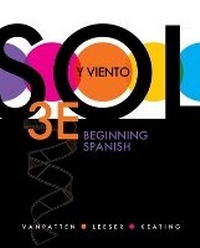
Audio CD Program part 1 for SOL Y VIENTO
3rd Edition
Published on 16. April 2011
Audio
CD-Audio
978-0-07-739771-5 (ISBN)
Description
Sol y viento integrates the latest in second language acquisition research with the highest quality, Hollywood caliber feature film available for the Introductory Spanish classroom. The Sol y viento program creates a distinct and captivating cultural experience that motivates students to develop their communication skills. Created specifically for beginning language learners, Sol y viento tells the story of a Chilean family and their winery, and of a young U.S. Latino businessman who finds himself intricately involved with the family as his company tries to buy their land. Mystery, romance, and the unexplainable forces of nature all play a part in this spellbinding story, drawing students in and compelling them to want to communicate about the film and its themes.
Sol y viento 3/e is available with CENTRO, a portal learning management system, which offers a diagnostic tool that provides students with tailored learning plans to address their specific learning needs. This integrated technology platform delivers a variety of digital components including Quia workbooks, laboratory manuals and an interactive e-book with voice board, allowing professors to deliver a seamless learning experience to students in both seated and virtual sections.
Sol y viento 3/e is available with CENTRO, a portal learning management system, which offers a diagnostic tool that provides students with tailored learning plans to address their specific learning needs. This integrated technology platform delivers a variety of digital components including Quia workbooks, laboratory manuals and an interactive e-book with voice board, allowing professors to deliver a seamless learning experience to students in both seated and virtual sections.
More details
Edition
3rd edition
Language
English
Place of publication
United States
Publishing group
McGraw-Hill Education - Europe
Edition type
Unabridged edition
Product notice
Audio CD
Dimensions
Height: 135 mm
Width: 132 mm
Thickness: 13 mm
Weight
113 gr
ISBN-13
978-0-07-739771-5 (9780077397715)
Copyright in bibliographic data and cover images is held by Nielsen Book Services Limited or by the publishers or by their respective licensors: all rights reserved.
Schweitzer Classification
Persons
Bill VanPatten is Professor and Director of Applied Linguistics and Second Language Studies at Texas Tech University. His areas of research are input and input processing in second language acquisition and the effects of formal instruction on acquisitional processes. He has published widely in the fields of second language acquisition and language teaching and is a frequent conference speaker and presenter. His publications include Making Communicative Language Teaching Happen (with James F. Lee, 2003,McGraw-Hill), From Input to Output: A Teacher's Guide to Second Language Acquisition (2003, McGraw-Hill), Processing Instruction: Theory, Research, and Practice (2004, Lawrence Erlbaum Associates) and most recently, Theories in Second Language Acquisition: An Introduction (with Jessica Williams, 2007, Lawrence Erlbaum Associates). He is the lead author of Vistazos, ?Sabias que...?, Destinos and Sol y viento. Dr. VanPatten is the 2007 recipient of the Anthony Papalia Award for Excellence in Teacher Education, awarded jointly by ACTFL and NYSAFLT. When not engaged in academic activities, he writes fiction and performs stand-up comedy. He has recently published his first work of fiction, a collection of short stories titled Chicago Tales, published by Outskirts Press (2007).
Michael J. Leeser is Assistant Professor of Spanish in the Department of Modern Languages and Linguistics at Florida State University, where he is also Director of the Spanish Basic Language Program. Before joining the faculty at Florida State, he taught a wide range of courses at the secondary and post-secondary levels, including courses in Spanish language and Hispanic cultures, teacher preparation courses for secondary school teachers, and graduate courses in communicative language teaching and second language acquisition. He received his Ph.D. in Spanish (Second Language Acquisition and Teacher Education) from the University of Illinois at Urbana-Champaign in 2003. His research interests include input processing during second language reading as well as second language classroom interaction. His research has appeared in journals such as Studies in Second Language Acquisition and Language Teaching Research. He also co-authored Sol y viento and Sol y viento: En breve (2008, McGraw-Hill).
Gregory D. Keating is Assistant Professor of Linguistics and Second Language Acquisition in the Department of Linguistics and Asian/Middle Eastern Languages at San Diego State University. Before joining the faculty at San Diego State, he taught courses in communicative language teaching and Spanish teacher education at the University of Illinois at Chicago, where he received his Ph.D. in Hispanic Linguistics and Second Language Acquisition. His areas of research include Spanish sentence processing, the role instruction plays in language acquisition, psycholinguistics, and the acquisition of Spanish syntax and vocabulary. He is a recipient of several teaching awards, including one from the University of Notre Dame, where he received his M.A. in Spanish Literature. In addition to teaching and research, he has supervised many language courses and teaching assistants and has assisted in the coordination of technology-enhanced lower-division Spanish language programs. He is also a co-author of Sol y viento and Sol y viento: En breve (2008, McGraw-Hill).
Michael J. Leeser is Assistant Professor of Spanish in the Department of Modern Languages and Linguistics at Florida State University, where he is also Director of the Spanish Basic Language Program. Before joining the faculty at Florida State, he taught a wide range of courses at the secondary and post-secondary levels, including courses in Spanish language and Hispanic cultures, teacher preparation courses for secondary school teachers, and graduate courses in communicative language teaching and second language acquisition. He received his Ph.D. in Spanish (Second Language Acquisition and Teacher Education) from the University of Illinois at Urbana-Champaign in 2003. His research interests include input processing during second language reading as well as second language classroom interaction. His research has appeared in journals such as Studies in Second Language Acquisition and Language Teaching Research. He also co-authored Sol y viento and Sol y viento: En breve (2008, McGraw-Hill).
Gregory D. Keating is Assistant Professor of Linguistics and Second Language Acquisition in the Department of Linguistics and Asian/Middle Eastern Languages at San Diego State University. Before joining the faculty at San Diego State, he taught courses in communicative language teaching and Spanish teacher education at the University of Illinois at Chicago, where he received his Ph.D. in Hispanic Linguistics and Second Language Acquisition. His areas of research include Spanish sentence processing, the role instruction plays in language acquisition, psycholinguistics, and the acquisition of Spanish syntax and vocabulary. He is a recipient of several teaching awards, including one from the University of Notre Dame, where he received his M.A. in Spanish Literature. In addition to teaching and research, he has supervised many language courses and teaching assistants and has assisted in the coordination of technology-enhanced lower-division Spanish language programs. He is also a co-author of Sol y viento and Sol y viento: En breve (2008, McGraw-Hill).
Content
Notes:The numbering system of lessons includes A and B lessons, each of which correspond to an episode of the film. For example, Lecciones 1A and 1B correspond to Episodio 1. The Leccion final corresponds to Episodio 9.
The Leccion preliminar and Leccion 1A provide a comprehensive listing of contents for those lessons, as representative of the other lessons. Leccion 1B - Leccion final provide only the vocabulary topics and grammatical structures.
Leccion preliminar: !Aqui estamos!Primera parte
Vocabulario: Me llamo...
(Meeting and Greeting People: Introductions)
Vistazo cultural: Los saludos
Gramatica: Soy de Mexico.
(Expressing Origin: Introduction to ser)Segunda parte
Vocabulario: Las materias
(Talking About Majors and Classes: School Subjects)
Gramatica: El calculo y las matematicas
(Naming Things: Articles, Gender, and Number)Tercera parte
Vocabulario: En la sala de clase(Talking About People and Things in the Classroom and on Campus: Classroom Objects)
Gramatica: Estan aqui.
(Expressing Location: Introduction to estar)Sol y viento
Prologo: Los espiritusVocabulario
Episodio 1: La llegadaLeccion 1A: Sobre los horariosPrimera parte
Vocabulario: Llevo quince creditos
Talking About Your Course Load: Numbers 0-30Sol y viento: Enfoque cultural
Vistazo cultural: Los cursos y los creditos
Gramatica: ?Estudio y trabajo?
Talking About Activities: Regular -ar VerbsSegunda parte
Vocabulario: Los dias de la semana
More About Schedules: Days of the Week
Vistazo cultural: Los calendarios
Gramatica: Necesito estudiar.
Talking about Needing or Wanting to Do Something: Verb + infinitiveTercera parte
Vocabulario: ?A que hora?
Talking About When You Do Things: Telling Time
Vistazo cultural: De 0:00 a 24:00
Gramatica: Es mi libro.
Talking About Ownership: Unstressed Possessive Adjectives
Resumen de gramatica
Panorama cultural: El mundo hispano
Vocabulario
Leccion 1B: Mas sobre las actividadesPrimera parte
Vocabulario: ?Cuando?
Asking Questions: Summary of Interrogative Words
Gramatica: ?Donde vives?
More on Activities and Schedules: Present Tense of Regular -er and -ir VerbsSegunda parte
Vocabulario: !Hace calor en junio!
Talking About Times of the Year: Months, Weather, Seasons
Gramatica: ?Vas a estudiar esta noche?
Expressing Future Events: ir + a + infinitiveTercera parte
Vocabulario: Es un hombre serio.
Describing Personalities: Adjectives
Gramatica: Es una mujer seria.
More on Describing People: Adjective Placement and Agreement
Episodio 2: El encuentroLeccion 2A: En la universidad y la ciudadPrimera parte
Vocabulario: ?Cuantos anos tiene?
Expressing Age: Numbers 31-100
Gramatica: Vengo de los Estados Unidos.
More on Talking About Activities: Verbs that End in -goSegunda parte
Vocabulario: ?Esta lejos o cerca?
Expressing Where Things and Places Are Located: Prepositions of Location
Gramatica: ?Donde estas y que estas haciendo?
Talking About Location and What People Are Doing: Two Uses of estarTercera parte
Vocabulario: Tengo que ir al banco.
Talking About Where you Do Things: Places in the City
Gramatica: Puedo caminar.
More on Talking About Activities: o -->ue, e --> ie Stem-Changing Verbs
Leccion 2B: !Vamos de compras!Primera parte
Vocabulario: La ropa
Talking About What People Wear: Clothing
Gramatica: ?Que dices?
More on Talking About People's Activities: e -->i Stem-Changing VerbsSegunda parte
Vocabulario: Hay doscientas blusas rojas.
More on Describing: Colors; Numbers 100-1,000
Gramatica: ?Que es esto?
Pointing Things Out: Demosntrative Adjectives and PronounsTercera parte
Vocabulario: De compras
Talking About Buying Things: Shopping
Gramatica: Esta bien.
Talking About Expected and Unexpected Qualities: More on ser and estar
Episodio 3: A la vinaLeccion 3A: La familiaPrimera parte
Vocabulario: Mi familia
Describing Families: Members of the Immediate Family; Pets
Gramatica: Si, conozco a la familia. ?Sabes donde estan?
Expressing Knowledge or Familiarity: Saber and conocer; Verbs that End in -zcoSegunda parte
Vocabulario: Los otros parientes
More on Describing Families: Extended Family Members
Gramatica: ?La conoce?
Eliminating Redundancy: Direct Object PronounsTercera parte
Vocabulario: No es muy alto.
Describing How People Look: Physical Traits
Gramatica: Es mas alto que yo.
More on Describing People and Things: Comparisons of Equality and Inequality
Leccion 3B: !A comer!Primera parte
Vocabulario: El desayuno
Talking About What You Eat in the Morning: Breakfast
Gramatica: No lo se tampoco.
Expressing Negation: Indefinite and Negative WordsSegunda parte
Vocabulario: El almuerzo y la merienda
Talking About What You Eat During the Day: Lunch and Snacking
Gramatica: Esta muy serio.
Talking About Conditions and Traits: Ser Versus estar with AdjectivesTercera parte
Vocabulario: La cena
Talking About What You Eat at Night: Dinner
Gramatica: ?Le gusta el vino?
Talking About To Whom and For Whom: Indirect Object Pronouns and gustar
Episodio 4: Otro encuentroLeccion 4A: Cuando no trabajo...Primera parte
Vocabulario: El tiempo libre
Talking About What You Do When You Don't Study or Work: Leisure Activities
Gramatica: Lo pase muy bien.
Introduction to Talking About the Past: Preterite Tense of Regular -ar VerbsSegunda parte
Vocabulario: El ejercicio y el gimnasio
Talking More About Leisure Time Activities: Sports and Fitness
Gramatica: Volvi tarde.
More on Talking About the Past: Preterite of Regular -er and -ir Verbs
Tercera parte
Vocabulario: ?Cuando celebras tu cumpleanos?
Talking About Special Events: Special Occasions and Holidays
Gramatica: ?Que hiciste?
More on Talking About the Past: Irregular Preterite Forms
Leccion 4B: En casaPrimera parte
Vocabulario: ?Donde vives?
Talking About Buildings and Where People Live:Vocabulary Related to Dwellings and Buildings
Gramatica: No durmio bien.
More on Talking About the Past: e--> i, o --> u Preterite Stem ChangesSegunda parte
Vocabulario: Es mi sillon favorito.
Talking About Things in the House: Furniture and Rooms
Gramatica: Me conozco bien.h5>
Talking About What People Do to and for Themselves: True Reflexive ConstructionsTercera parte
Vocabulario: ?Te gusta lavar la ropa?
Talking About Domestic Tasks: Domestic Chores and Routines
Gramatica: ?Para mi?
Talking About What Something Is For: Introduction to por Versus para
Episodio 5: Un dia perfectoLeccion 5A: La tecnologia y yoPrimera parte
Vocabulario: Mi computadora
Talking About Everyday Technology: Computers and Computer Use
Gramatica: !Me fascina!
More on Talking About Likes and Dislikes: Verbs Like gustarSegunda parte
Vocabulario: Mi celular
Talking About Reliance on Technology: Vocabulary Related to Electronic Devices
Gramatica: Ya te lo dije.
More on Avoiding Redundancy: Double-Object PronounsTercera parte
Vocabulario: Mi ninez y juventud
Talking About When You Were Younger: Typical Childhood and Adolescent Activities
Gramatica: ?En que trabajabas?
Talking About What You Used to Do: Introduction to the Imperfect Tense
Leccion 5B: Erase una vez...Primera parte
Vocabulario: En 1972...
Expressing Years: Numbers 1,000 and Higher
Gramatica: ?Que hacias cuando te llame?
More on Talking About the Past: Contrasting the Preterite and ImperfectSegunda parte
Vocabulario: Durante la gerra...
Talking About Historical Events: Important Events and Occurrences
Gramatica: !No lo sabia!
More on Talking About the Past: More on Using the Preterite and Imperfect TogetherTercera parte
Vocabulario: Me gradue en 2010.
Talking About Special Events: Personal Events, Triumphs, and Failures
Gramatica: Tenia 30 anos cuando nacio mi primer hijo.
More on Talking About the Past: Summary of the Preterite and Imperfect
Episodio 6: ConfrontacionLeccion 6A:
Vamos al extranjeroPrimera parte
Vocabulario: Para hacer viajes
Talking About Taking Trips and Traveling: Travel Vocabulary
Gramatica: Vuelva Ud. manana.
Giving Instructions: Affirmative Formal CommandsSegunda parte
Vocabulario: ?Como llego?
Getting Around Town: Giving and Receiving Directions
Gramatica: !No vuelvan tarde!
More on Giving Instructions: Negative Formal CommandsTercera parte
Vocabulario: En el restaurante
Ordering Meals in a Restaurant: Dining Out
Gramatica: !Lo he pasado muy bien!
Taking About What Has Happened: Introduction to the Present Perfect
Leccion 6B: La naturaleza y el medio ambientePrimera parte
Vocabulario: ?Como es el paisaje?
Talking About the Natural World: Geography and Geographical Features
Gramatica: !Ten paciencia!
More on Giving Instructions: Affirmative Informal CommandsSegunda parte
Vocabulario: El medio ambiente
Talking About the Environment: Environmental and Ecological Matters
Gramatica: !No me hables!
Telling Someone What Not to Do: Negative Informal CommandsTercera parte
Vocabulario: De vacaciones
More on Talking About Trips: Activities to Do While on Vacation
Gramatica: Es el mas guapo de todos.
Expressing The Most and The Least: Superlatives
Episodio 7: Bajo el solLeccion 7A: ?Como te sientes?Primera parte
Vocabulario: Estoy tenso.
Talking About Feelings and Mental Conditions: Describing Emotions
Gramatica: ?Como se siente?
Talking About Reactions and Changes of Emotion: Pseudo-Reflexive VerbsSegunda parte
Vocabulario: Algunas partes del cuerpo.
Talking about Health: Parts of the Body and Physical Health
Gramatica: Estaban contentos, ?no?
More on Talking About States of Being in the Past: Review of the ImperfectTercera parte
Vocabulario: Me duele la garganta.
Telling the Doctor How You Feel: In the Doctor's Office
Gramatica: Hace dos anos que se me rompio el brazo.
Talking About When Something Happened: Hacer in Expressions of Time
Leccion 7B: Los demas y yoPrimera parte
Vocabulario: Te tengo mucho carino.
Talking About How You Feel About Someone: Feelings
Gramatica: Se conocen bien.
Talking About What People Do to and for Each Other: Reciprocal ReflexivesSegunda parte
Vocabulario: Eres muy romantico.
More on Describing People's Traits: Describing People
Gramatica: Espero que sea divertido.
Talking About Your Wishes and Desires: Introduction to the SubjunctiveTercera parte
Vocabulario: !Me engano!
Talking About Good and Bad Relationships: More on Relationships
Gramatica: A menos que no quieras...
Talking About Contingencies and Conditions: Obligatory Subjunctive
Episodio 8: Sin alternativaLeccion 8A: El dinero y las finanzasPrimera parte
Vocabulario: ?Como manejas el dinero?
Talking About Money: Your Personal Finances
Gramatica: Ver es creer.
Using Verbs As Nouns: Progressive Versus InfinitivesSegunda parte
Vocabulario: Las deudas
Talking About Payments, Loans, and Debts: More on Personal Finances
Gramatica: ?Que harias?
Talking About What You Would Do: Introduction to the ConditionalTercera parte
Vocabulario: La economia
Talking About the Economy: Local and World Markets
Gramatica: Si tuviera mas dinero...
Expressing Hypothetical Events: Hypothetical Statements; Introduction to the Imperfect Subjunctive
Leccion 8B: Los medios de comunicacionPrimera parte
Vocabulario: ?Como te informas?
Talking About Current Events: Getting Information
Gramatica: Te llamo por telefono.
Talking About How You Do Something: Por and para: A SummarySegunda parte
Vocabulario: ?Que hay en la television?
Talking About What's on TV: Types of Programming
Gramatica: Dudo que lo sepa.
Expressing Disbelief: Subjunctive of Doubt, Denial, and UncertaintyTercera parte
Vocabulario: La responsabilidad civica
Talking About Being a Valuable Member of Society: Civic Duty and Citizenship
Gramatica: ?Que quieres que haga?
Talking About What You Want to Happen: Subjunctive of Volition and Desire
Episodio 9: Un brindis por el futuroLeccion final: Lo que nos esperaPrimera parte
Vocabulario: Las profesiones
Talking About Jobs and Professions: Vocabulary Related to Professions
Gramatica: ?Que pasara?
Talking About the Future: Introduction to the Future TenseSegunda parte
Vocabulario: Caracteristicas necesarias y preferidas en el mundo laboral
Talking About Traits Needed for Professions: Required and Preferred Characteristics in the Workplace
Gramatica: Buscamos alguien que sea empresario...Tercera parte
Vocabulario: Mis metas personales
Talking About Goals and Aspirations: Future Aspirations
Gramatica: No estare contento hasta que...
More on Talking About the Future: Subjunctive with Future Time Events
The Leccion preliminar and Leccion 1A provide a comprehensive listing of contents for those lessons, as representative of the other lessons. Leccion 1B - Leccion final provide only the vocabulary topics and grammatical structures.
Leccion preliminar: !Aqui estamos!Primera parte
Vocabulario: Me llamo...
(Meeting and Greeting People: Introductions)
Vistazo cultural: Los saludos
Gramatica: Soy de Mexico.
(Expressing Origin: Introduction to ser)Segunda parte
Vocabulario: Las materias
(Talking About Majors and Classes: School Subjects)
Gramatica: El calculo y las matematicas
(Naming Things: Articles, Gender, and Number)Tercera parte
Vocabulario: En la sala de clase(Talking About People and Things in the Classroom and on Campus: Classroom Objects)
Gramatica: Estan aqui.
(Expressing Location: Introduction to estar)Sol y viento
Prologo: Los espiritusVocabulario
Episodio 1: La llegadaLeccion 1A: Sobre los horariosPrimera parte
Vocabulario: Llevo quince creditos
Talking About Your Course Load: Numbers 0-30Sol y viento: Enfoque cultural
Vistazo cultural: Los cursos y los creditos
Gramatica: ?Estudio y trabajo?
Talking About Activities: Regular -ar VerbsSegunda parte
Vocabulario: Los dias de la semana
More About Schedules: Days of the Week
Vistazo cultural: Los calendarios
Gramatica: Necesito estudiar.
Talking about Needing or Wanting to Do Something: Verb + infinitiveTercera parte
Vocabulario: ?A que hora?
Talking About When You Do Things: Telling Time
Vistazo cultural: De 0:00 a 24:00
Gramatica: Es mi libro.
Talking About Ownership: Unstressed Possessive Adjectives
Resumen de gramatica
Panorama cultural: El mundo hispano
Vocabulario
Leccion 1B: Mas sobre las actividadesPrimera parte
Vocabulario: ?Cuando?
Asking Questions: Summary of Interrogative Words
Gramatica: ?Donde vives?
More on Activities and Schedules: Present Tense of Regular -er and -ir VerbsSegunda parte
Vocabulario: !Hace calor en junio!
Talking About Times of the Year: Months, Weather, Seasons
Gramatica: ?Vas a estudiar esta noche?
Expressing Future Events: ir + a + infinitiveTercera parte
Vocabulario: Es un hombre serio.
Describing Personalities: Adjectives
Gramatica: Es una mujer seria.
More on Describing People: Adjective Placement and Agreement
Episodio 2: El encuentroLeccion 2A: En la universidad y la ciudadPrimera parte
Vocabulario: ?Cuantos anos tiene?
Expressing Age: Numbers 31-100
Gramatica: Vengo de los Estados Unidos.
More on Talking About Activities: Verbs that End in -goSegunda parte
Vocabulario: ?Esta lejos o cerca?
Expressing Where Things and Places Are Located: Prepositions of Location
Gramatica: ?Donde estas y que estas haciendo?
Talking About Location and What People Are Doing: Two Uses of estarTercera parte
Vocabulario: Tengo que ir al banco.
Talking About Where you Do Things: Places in the City
Gramatica: Puedo caminar.
More on Talking About Activities: o -->ue, e --> ie Stem-Changing Verbs
Leccion 2B: !Vamos de compras!Primera parte
Vocabulario: La ropa
Talking About What People Wear: Clothing
Gramatica: ?Que dices?
More on Talking About People's Activities: e -->i Stem-Changing VerbsSegunda parte
Vocabulario: Hay doscientas blusas rojas.
More on Describing: Colors; Numbers 100-1,000
Gramatica: ?Que es esto?
Pointing Things Out: Demosntrative Adjectives and PronounsTercera parte
Vocabulario: De compras
Talking About Buying Things: Shopping
Gramatica: Esta bien.
Talking About Expected and Unexpected Qualities: More on ser and estar
Episodio 3: A la vinaLeccion 3A: La familiaPrimera parte
Vocabulario: Mi familia
Describing Families: Members of the Immediate Family; Pets
Gramatica: Si, conozco a la familia. ?Sabes donde estan?
Expressing Knowledge or Familiarity: Saber and conocer; Verbs that End in -zcoSegunda parte
Vocabulario: Los otros parientes
More on Describing Families: Extended Family Members
Gramatica: ?La conoce?
Eliminating Redundancy: Direct Object PronounsTercera parte
Vocabulario: No es muy alto.
Describing How People Look: Physical Traits
Gramatica: Es mas alto que yo.
More on Describing People and Things: Comparisons of Equality and Inequality
Leccion 3B: !A comer!Primera parte
Vocabulario: El desayuno
Talking About What You Eat in the Morning: Breakfast
Gramatica: No lo se tampoco.
Expressing Negation: Indefinite and Negative WordsSegunda parte
Vocabulario: El almuerzo y la merienda
Talking About What You Eat During the Day: Lunch and Snacking
Gramatica: Esta muy serio.
Talking About Conditions and Traits: Ser Versus estar with AdjectivesTercera parte
Vocabulario: La cena
Talking About What You Eat at Night: Dinner
Gramatica: ?Le gusta el vino?
Talking About To Whom and For Whom: Indirect Object Pronouns and gustar
Episodio 4: Otro encuentroLeccion 4A: Cuando no trabajo...Primera parte
Vocabulario: El tiempo libre
Talking About What You Do When You Don't Study or Work: Leisure Activities
Gramatica: Lo pase muy bien.
Introduction to Talking About the Past: Preterite Tense of Regular -ar VerbsSegunda parte
Vocabulario: El ejercicio y el gimnasio
Talking More About Leisure Time Activities: Sports and Fitness
Gramatica: Volvi tarde.
More on Talking About the Past: Preterite of Regular -er and -ir Verbs
Tercera parte
Vocabulario: ?Cuando celebras tu cumpleanos?
Talking About Special Events: Special Occasions and Holidays
Gramatica: ?Que hiciste?
More on Talking About the Past: Irregular Preterite Forms
Leccion 4B: En casaPrimera parte
Vocabulario: ?Donde vives?
Talking About Buildings and Where People Live:Vocabulary Related to Dwellings and Buildings
Gramatica: No durmio bien.
More on Talking About the Past: e--> i, o --> u Preterite Stem ChangesSegunda parte
Vocabulario: Es mi sillon favorito.
Talking About Things in the House: Furniture and Rooms
Gramatica: Me conozco bien.h5>
Talking About What People Do to and for Themselves: True Reflexive ConstructionsTercera parte
Vocabulario: ?Te gusta lavar la ropa?
Talking About Domestic Tasks: Domestic Chores and Routines
Gramatica: ?Para mi?
Talking About What Something Is For: Introduction to por Versus para
Episodio 5: Un dia perfectoLeccion 5A: La tecnologia y yoPrimera parte
Vocabulario: Mi computadora
Talking About Everyday Technology: Computers and Computer Use
Gramatica: !Me fascina!
More on Talking About Likes and Dislikes: Verbs Like gustarSegunda parte
Vocabulario: Mi celular
Talking About Reliance on Technology: Vocabulary Related to Electronic Devices
Gramatica: Ya te lo dije.
More on Avoiding Redundancy: Double-Object PronounsTercera parte
Vocabulario: Mi ninez y juventud
Talking About When You Were Younger: Typical Childhood and Adolescent Activities
Gramatica: ?En que trabajabas?
Talking About What You Used to Do: Introduction to the Imperfect Tense
Leccion 5B: Erase una vez...Primera parte
Vocabulario: En 1972...
Expressing Years: Numbers 1,000 and Higher
Gramatica: ?Que hacias cuando te llame?
More on Talking About the Past: Contrasting the Preterite and ImperfectSegunda parte
Vocabulario: Durante la gerra...
Talking About Historical Events: Important Events and Occurrences
Gramatica: !No lo sabia!
More on Talking About the Past: More on Using the Preterite and Imperfect TogetherTercera parte
Vocabulario: Me gradue en 2010.
Talking About Special Events: Personal Events, Triumphs, and Failures
Gramatica: Tenia 30 anos cuando nacio mi primer hijo.
More on Talking About the Past: Summary of the Preterite and Imperfect
Episodio 6: ConfrontacionLeccion 6A:
Vamos al extranjeroPrimera parte
Vocabulario: Para hacer viajes
Talking About Taking Trips and Traveling: Travel Vocabulary
Gramatica: Vuelva Ud. manana.
Giving Instructions: Affirmative Formal CommandsSegunda parte
Vocabulario: ?Como llego?
Getting Around Town: Giving and Receiving Directions
Gramatica: !No vuelvan tarde!
More on Giving Instructions: Negative Formal CommandsTercera parte
Vocabulario: En el restaurante
Ordering Meals in a Restaurant: Dining Out
Gramatica: !Lo he pasado muy bien!
Taking About What Has Happened: Introduction to the Present Perfect
Leccion 6B: La naturaleza y el medio ambientePrimera parte
Vocabulario: ?Como es el paisaje?
Talking About the Natural World: Geography and Geographical Features
Gramatica: !Ten paciencia!
More on Giving Instructions: Affirmative Informal CommandsSegunda parte
Vocabulario: El medio ambiente
Talking About the Environment: Environmental and Ecological Matters
Gramatica: !No me hables!
Telling Someone What Not to Do: Negative Informal CommandsTercera parte
Vocabulario: De vacaciones
More on Talking About Trips: Activities to Do While on Vacation
Gramatica: Es el mas guapo de todos.
Expressing The Most and The Least: Superlatives
Episodio 7: Bajo el solLeccion 7A: ?Como te sientes?Primera parte
Vocabulario: Estoy tenso.
Talking About Feelings and Mental Conditions: Describing Emotions
Gramatica: ?Como se siente?
Talking About Reactions and Changes of Emotion: Pseudo-Reflexive VerbsSegunda parte
Vocabulario: Algunas partes del cuerpo.
Talking about Health: Parts of the Body and Physical Health
Gramatica: Estaban contentos, ?no?
More on Talking About States of Being in the Past: Review of the ImperfectTercera parte
Vocabulario: Me duele la garganta.
Telling the Doctor How You Feel: In the Doctor's Office
Gramatica: Hace dos anos que se me rompio el brazo.
Talking About When Something Happened: Hacer in Expressions of Time
Leccion 7B: Los demas y yoPrimera parte
Vocabulario: Te tengo mucho carino.
Talking About How You Feel About Someone: Feelings
Gramatica: Se conocen bien.
Talking About What People Do to and for Each Other: Reciprocal ReflexivesSegunda parte
Vocabulario: Eres muy romantico.
More on Describing People's Traits: Describing People
Gramatica: Espero que sea divertido.
Talking About Your Wishes and Desires: Introduction to the SubjunctiveTercera parte
Vocabulario: !Me engano!
Talking About Good and Bad Relationships: More on Relationships
Gramatica: A menos que no quieras...
Talking About Contingencies and Conditions: Obligatory Subjunctive
Episodio 8: Sin alternativaLeccion 8A: El dinero y las finanzasPrimera parte
Vocabulario: ?Como manejas el dinero?
Talking About Money: Your Personal Finances
Gramatica: Ver es creer.
Using Verbs As Nouns: Progressive Versus InfinitivesSegunda parte
Vocabulario: Las deudas
Talking About Payments, Loans, and Debts: More on Personal Finances
Gramatica: ?Que harias?
Talking About What You Would Do: Introduction to the ConditionalTercera parte
Vocabulario: La economia
Talking About the Economy: Local and World Markets
Gramatica: Si tuviera mas dinero...
Expressing Hypothetical Events: Hypothetical Statements; Introduction to the Imperfect Subjunctive
Leccion 8B: Los medios de comunicacionPrimera parte
Vocabulario: ?Como te informas?
Talking About Current Events: Getting Information
Gramatica: Te llamo por telefono.
Talking About How You Do Something: Por and para: A SummarySegunda parte
Vocabulario: ?Que hay en la television?
Talking About What's on TV: Types of Programming
Gramatica: Dudo que lo sepa.
Expressing Disbelief: Subjunctive of Doubt, Denial, and UncertaintyTercera parte
Vocabulario: La responsabilidad civica
Talking About Being a Valuable Member of Society: Civic Duty and Citizenship
Gramatica: ?Que quieres que haga?
Talking About What You Want to Happen: Subjunctive of Volition and Desire
Episodio 9: Un brindis por el futuroLeccion final: Lo que nos esperaPrimera parte
Vocabulario: Las profesiones
Talking About Jobs and Professions: Vocabulary Related to Professions
Gramatica: ?Que pasara?
Talking About the Future: Introduction to the Future TenseSegunda parte
Vocabulario: Caracteristicas necesarias y preferidas en el mundo laboral
Talking About Traits Needed for Professions: Required and Preferred Characteristics in the Workplace
Gramatica: Buscamos alguien que sea empresario...Tercera parte
Vocabulario: Mis metas personales
Talking About Goals and Aspirations: Future Aspirations
Gramatica: No estare contento hasta que...
More on Talking About the Future: Subjunctive with Future Time Events