

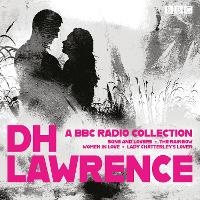
D. H. Lawrence: A BBC Radio Collection
14 dramatisations and radio readings including Lady Chatterley's Lover, Sons and Lovers, The Rainbow and Women in Love
Published on 1. August 2019
Audio
CD-Audio
978-1-78753-722-4 (ISBN)
Description
Dramatisations and readings of DH Lawrence's four best-known novels, as heard on BBC Radio 4
Crowned 'the greatest imaginative novelist of our generation' by EM Forster, DH Lawrence has an undisputed place in England's canon of great authors. This collection brings together dramatisations and readings of his four most famous novels, exploring themes such as sexual desire, the complexity of human relationships, individual freedom and social change.
Sons and Lovers
Conflicts grow for Nottinghamshire mining family Gertrude and Walter Morel and their sons in this powerful full-cast dramatisation starring Benedict Sandiford and Elizabeth Estensen.
The Rainbow
This abridged version of Lawrence's classic explores the lives and loves of three generations of the Brangwen family at Marsh Farm. Read by David Bradley.
Women in Love
In this dramatisation of Lawrence's passionate novel - the sequel to The Rainbow - sisters Ursula and Gudrun attract the attention of two very different gentlemen - with very different responses to love. Starring Clare Holman, Stella Gonet, Douglas Hodge and Nicholas Farrell.
Lady Chatterley's Lover
An emotionally frustrated aristocrat embarks on an adulterous affair with her gamekeeper in this abridged reading by Ian Hogg.
Crowned 'the greatest imaginative novelist of our generation' by EM Forster, DH Lawrence has an undisputed place in England's canon of great authors. This collection brings together dramatisations and readings of his four most famous novels, exploring themes such as sexual desire, the complexity of human relationships, individual freedom and social change.
Sons and Lovers
Conflicts grow for Nottinghamshire mining family Gertrude and Walter Morel and their sons in this powerful full-cast dramatisation starring Benedict Sandiford and Elizabeth Estensen.
The Rainbow
This abridged version of Lawrence's classic explores the lives and loves of three generations of the Brangwen family at Marsh Farm. Read by David Bradley.
Women in Love
In this dramatisation of Lawrence's passionate novel - the sequel to The Rainbow - sisters Ursula and Gudrun attract the attention of two very different gentlemen - with very different responses to love. Starring Clare Holman, Stella Gonet, Douglas Hodge and Nicholas Farrell.
Lady Chatterley's Lover
An emotionally frustrated aristocrat embarks on an adulterous affair with her gamekeeper in this abridged reading by Ian Hogg.
More details
Edition
Unabridged edition
Language
English
Place of publication
London
United Kingdom
Publishing group
BBC Worldwide Ltd
Edition type
Unabridged edition
Product notice
Audio CD
Dimensions
Height: 141 mm
Width: 138 mm
Thickness: 23 mm
Duration
Dauer: 746 min
Weight
273 gr
ISBN-13
978-1-78753-722-4 (9781787537224)
Copyright in bibliographic data and cover images is held by Nielsen Book Services Limited or by the publishers or by their respective licensors: all rights reserved.
Schweitzer Classification
Persons
D.H. Lawrence (Author)
D.H. Lawrence was born as David Herbert Lawrence. He was born on September 11, 1885, in Eastwood, Nottinghamshire, England, to a working-class family. His early life experiences
and the social environment he grew up in greatly influenced his writing.
In his childhood, Lawrence witnessed the struggles and tensions within his family and the surrounding mining community. His father worked as a miner, and his mother's
unhappiness and frustrations in her marriage left a lasting impact on Lawrence. Despite the challenges, Lawrence showed an early aptitude for education and was awarded a scholarship to Nottingham High School.
Lawrence's time at school exposed him to a broader world of literature and ideas. He excelled academically, developing a passion for literature, poetry, and art. His intellectual
pursuits led him to study classics at Nottingham University College (now the University of Nottingham) in 1906. At
university, Lawrence encountered a vibrant literary and artistic community, which further fuelled his creative aspirations.
During his university years, Lawrence began writing poetry, short stories, and essays. He explored themes of human relationships, sexuality, and the profound connection between man and nature.
After leaving university, Lawrence experienced a period of restlessness and uncertainty. He held various jobs, including working as a schoolteacher and a clerk, while continuing to
write.
His early works were not commercially successful, and he struggled financially.
However, Lawrence's breakthrough came with the publication of his novel Sons and Lovers in 1913. It received critical acclaim for its psychological depth and vivid storytelling. The success of it marked the beginning of Lawrence's rise to literary fame. In the years that followed, Lawrence published several
notable works, including The Rainbow (1915) and Women in Love (1920). Both faced censorship and controversy due to their explicit depictions of sexuality. Lawrence's writing
challenged societal norms and conventions. It explored the complexities of human desires and relationships in a candid manner. Lawrence's reputation as a groundbreaking writer grew, but he faced ongoing struggles with censorship and
public reception.
His works continued to delve into themes
of passion, individuality, and the clash between nature and industrialization. Sadly, Lawrence's life was cut short when he succumbed to tuberculosis on March 2 1930, in Vence, France.
He was 44 at that time. His literary legacy, however, lives on, and his works have had a profound and lasting impact on 20th-century literature. D.H. Lawrence's fearless exploration
of human emotions and the complexities of relationships continues to captivate readers to this day.
D.H. Lawrence was born as David Herbert Lawrence. He was born on September 11, 1885, in Eastwood, Nottinghamshire, England, to a working-class family. His early life experiences
and the social environment he grew up in greatly influenced his writing.
In his childhood, Lawrence witnessed the struggles and tensions within his family and the surrounding mining community. His father worked as a miner, and his mother's
unhappiness and frustrations in her marriage left a lasting impact on Lawrence. Despite the challenges, Lawrence showed an early aptitude for education and was awarded a scholarship to Nottingham High School.
Lawrence's time at school exposed him to a broader world of literature and ideas. He excelled academically, developing a passion for literature, poetry, and art. His intellectual
pursuits led him to study classics at Nottingham University College (now the University of Nottingham) in 1906. At
university, Lawrence encountered a vibrant literary and artistic community, which further fuelled his creative aspirations.
During his university years, Lawrence began writing poetry, short stories, and essays. He explored themes of human relationships, sexuality, and the profound connection between man and nature.
After leaving university, Lawrence experienced a period of restlessness and uncertainty. He held various jobs, including working as a schoolteacher and a clerk, while continuing to
write.
His early works were not commercially successful, and he struggled financially.
However, Lawrence's breakthrough came with the publication of his novel Sons and Lovers in 1913. It received critical acclaim for its psychological depth and vivid storytelling. The success of it marked the beginning of Lawrence's rise to literary fame. In the years that followed, Lawrence published several
notable works, including The Rainbow (1915) and Women in Love (1920). Both faced censorship and controversy due to their explicit depictions of sexuality. Lawrence's writing
challenged societal norms and conventions. It explored the complexities of human desires and relationships in a candid manner. Lawrence's reputation as a groundbreaking writer grew, but he faced ongoing struggles with censorship and
public reception.
His works continued to delve into themes
of passion, individuality, and the clash between nature and industrialization. Sadly, Lawrence's life was cut short when he succumbed to tuberculosis on March 2 1930, in Vence, France.
He was 44 at that time. His literary legacy, however, lives on, and his works have had a profound and lasting impact on 20th-century literature. D.H. Lawrence's fearless exploration
of human emotions and the complexities of relationships continues to captivate readers to this day.