

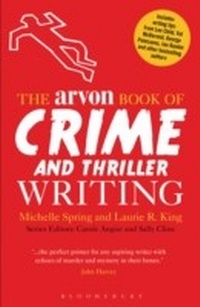
The Arvon Book of Crime and Thriller Writing
1. Auflage
Erschienen am 25. Oktober 2012
304 Seiten
978-1-4081-6616-1 (ISBN)
Beschreibung

This is the second book in the Arvon series of books on writing. Written by two distinguished writers in the field, Michelle Spring and Laurie R. King, the book reveals, with riveting honesty, why and how authors are drawn to write about crime. The book also features fascinating insights from twenty-six top crime-writing guests. The Arvon Book of Crime and Thriller Writing is a detailed, practical guide to writing every kind of crime story, from classic whodunits to fast-paced thrillers. The book's objective is to bring together some of the lessons and insights that the authors and contributors have learned over their careers, to help the readers to free their creative minds, while also studying the solid technique behind writing in this genre. The Arvon Book of Crime Writing captures the essence of Arvon teaching into a practical handbook for writers, packed with tips and advice from leading novelists as well reflections on the genre itself and practical instruction on great storytelling.
The Arvon Foundation runs professional writing courses by published writers and provides expert tuition and creative support. Contributors from leading crime writers include: Lee Child, P.D James, and Ian Rankin. The Arvon Book of Crime Writing is divided into three sections: Part 1 - Essays on critical issues in the genre, Part 2: Guest Writers - 25 contributors offering advice and tips Part 3: How To Write Crime.
The Arvon Foundation runs professional writing courses by published writers and provides expert tuition and creative support. Contributors from leading crime writers include: Lee Child, P.D James, and Ian Rankin. The Arvon Book of Crime Writing is divided into three sections: Part 1 - Essays on critical issues in the genre, Part 2: Guest Writers - 25 contributors offering advice and tips Part 3: How To Write Crime.
Weitere Details
Auflage
1. Auflage
Sprache
Englisch
Verlagsort
London
Großbritannien
Verlagsgruppe
Bloomsbury Publishing PLC
Zielgruppe
Für Beruf und Forschung
ISBN-13
978-1-4081-6616-1 (9781408166161)
Copyright in bibliographic data and cover images is held by Nielsen Book Services Limited or by the publishers or by their respective licensors: all rights reserved.
Schweitzer Klassifikation
Weitere Ausgaben
Andere Ausgaben
Laurie R. King | Michelle Spring
The Arvon Book of Crime and Thriller Writing
Buch
08/2012
Bloomsbury Academic
38,55 €
Artikel ist vergriffen; siehe andere Ausgabe
Personen
Michelle Spring, has published six crime novels including Every Breath You Take (short-listed as Best First Novel for both an Anthony and an Arthur Ellis Award), Nights in White Satin, In the Midnight Hour (winner of the Arthur Ellis Award for Best Novel) and The Night Lawyer. She mentors novelists, and teaches both creative writing and academic writing. She is currently Royal Literary Fellow at Magdalene College, Cambridge.
Laurie R. King's books have won the Edgar, Creasey, Wolfe, Lambda, and Macavity awards, and appear regularly on the New York Times bestseller list.mentors novelists, and teaches both creative writing and academic writing. She is currently Royal Literary Fellow at Magdalene College, Cambridge.
Laurie R. King's books have won the Edgar, Creasey, Wolfe, Lambda, and Macavity awards, and appear regularly on the New York Times bestseller list.mentors novelists, and teaches both creative writing and academic writing. She is currently Royal Literary Fellow at Magdalene College, Cambridge.
Inhalt
Preface
Foreword by P. D. James
Preface by Carole Angier and Sally Cline
Introduction by Michelle Spring and Laurie R. King
Notes on Format and Terminology
Part One: On a Life of Crime
Reflections I, Michelle Spring: Thoughts About Crime
'I Always Knew I Wanted to Be a Writer'
Reasons to Write a Crime Novel
The Shadow of Violence
Just When You Thought It Was Safe to Come out of the Water...
Psychopaths and Everyday Killers
The Grim Reaper
Reflections II, Laurie R. King: A Life of Crime (Fiction)
An Honorable Calling
Mysteries, Greater and Lesser
Making a Crime Writer
The Mystery of the Mystery
Still Just Writing Haiku?
Writing as an Active Verb
Ways of Writing
Michelle Spring: The Orderly School of Writing
Laurie R. King: The Organic Way
Coda
The World of Crime
The Roots of the Matter: a History of Crime Fiction
What is Crime?
The Spectrum, Gentle to Thriller
Getting Ready
Reading Like a Writer
Ideas
Write What You Really Know
Where Do You Get Your Ideas?
Harvesting Ideas
Testing Ideas
Getting Rid of Ideas
Early Decisions
Point of View
Setting
Period
Series or Standalone?
'Sub-plots', 'Themes', and 'Author's Voice'
Plotting: How (and When) to Do It
The Organic Approach
The Orderly Approach
Middle Ground: The Orderly Organics
Research
What You Need to Know in Order to Write
Research in Stages
A Sense of Place
Library Vs Internet
The Expert
Taking Control of Your Research
Part Two: Guest Authors
Mark Billingham
S. J. Bolton
Alafair Burke
Lee Child
N. J. Cooper
Meg Gardiner
Tess Gerritsen
Sophie Hannah
Jim Kelly
Laura Lippman
Gayle Lynds
Alex Mcbride
Val Mcdermid
Dreda Say Mitchell
Sara Paretsky
Jill Paton Walsh
George Pelecanos
Ian Rankin
Peter Robinson
S. J. Rozan
Guy Saville
Yrsa Sigurdardóttir
Dana Stabenow
Andrew Taylor
Charles Todd
Laura Wilson
Part 3: Getting Your Story Across
The Tools of Writing
Plots, Characters, and Story: Chicken or Egg?
Plot Vs. Story
Language
Description
Setting-place and Time
Atmosphere, or, in Defence of Weather
Divisions: Sentence, Scene, Chapter, Book
Preface and Prologue
Dialogue and Body Language
Humour
Titles
Characters
Characters in Crime Fiction
What Do the Characters Want?
Narrators and Protagonists
Heroes and Villains
Sidekicks and Supporting Actors
The Victim
Distinctive Elements of Crime Fiction
Coincidence and Fair Play
The Clue
The Red Herring
Conflict and Violence
Pace and Progression
Stay True to Your Niche?
When the Going Gets Tough
Writer's Block
Working with Others-courses, Writing Groups, and Mentors
The Story's Arc, or Acts
The Curtain Rises: Opening and Hook
Act One: The Beginning
The Setup
Action and Suspense
Backstory and the Series Novel
Act Two: The Middle
Heaping on the Challenges
Pace-peaks and Valleys
Act Three: The Endgame
Closing and Coda
When You're 'finished': The Rewrite
The Rewrite
Reading Aloud
How Many Drafts?
What Next?
When You're Really Finished
The Publishable Manuscript
E-publishing
The Agent
Contests
When to Start the Promotion Wagon Rolling?
Author's Web Site
Social Media
Outreach
The Writer's Public Face
Conferences and Classes
Taking Criticism
What Are You Aiming For?
Resources and Reading
A Writer's Reference Library
Research Tools: Maps, Guidebooks, Experts, the Internet
Novels to Study
Bibliography
Foreword by P. D. James
Preface by Carole Angier and Sally Cline
Introduction by Michelle Spring and Laurie R. King
Notes on Format and Terminology
Part One: On a Life of Crime
Reflections I, Michelle Spring: Thoughts About Crime
'I Always Knew I Wanted to Be a Writer'
Reasons to Write a Crime Novel
The Shadow of Violence
Just When You Thought It Was Safe to Come out of the Water...
Psychopaths and Everyday Killers
The Grim Reaper
Reflections II, Laurie R. King: A Life of Crime (Fiction)
An Honorable Calling
Mysteries, Greater and Lesser
Making a Crime Writer
The Mystery of the Mystery
Still Just Writing Haiku?
Writing as an Active Verb
Ways of Writing
Michelle Spring: The Orderly School of Writing
Laurie R. King: The Organic Way
Coda
The World of Crime
The Roots of the Matter: a History of Crime Fiction
What is Crime?
The Spectrum, Gentle to Thriller
Getting Ready
Reading Like a Writer
Ideas
Write What You Really Know
Where Do You Get Your Ideas?
Harvesting Ideas
Testing Ideas
Getting Rid of Ideas
Early Decisions
Point of View
Setting
Period
Series or Standalone?
'Sub-plots', 'Themes', and 'Author's Voice'
Plotting: How (and When) to Do It
The Organic Approach
The Orderly Approach
Middle Ground: The Orderly Organics
Research
What You Need to Know in Order to Write
Research in Stages
A Sense of Place
Library Vs Internet
The Expert
Taking Control of Your Research
Part Two: Guest Authors
Mark Billingham
S. J. Bolton
Alafair Burke
Lee Child
N. J. Cooper
Meg Gardiner
Tess Gerritsen
Sophie Hannah
Jim Kelly
Laura Lippman
Gayle Lynds
Alex Mcbride
Val Mcdermid
Dreda Say Mitchell
Sara Paretsky
Jill Paton Walsh
George Pelecanos
Ian Rankin
Peter Robinson
S. J. Rozan
Guy Saville
Yrsa Sigurdardóttir
Dana Stabenow
Andrew Taylor
Charles Todd
Laura Wilson
Part 3: Getting Your Story Across
The Tools of Writing
Plots, Characters, and Story: Chicken or Egg?
Plot Vs. Story
Language
Description
Setting-place and Time
Atmosphere, or, in Defence of Weather
Divisions: Sentence, Scene, Chapter, Book
Preface and Prologue
Dialogue and Body Language
Humour
Titles
Characters
Characters in Crime Fiction
What Do the Characters Want?
Narrators and Protagonists
Heroes and Villains
Sidekicks and Supporting Actors
The Victim
Distinctive Elements of Crime Fiction
Coincidence and Fair Play
The Clue
The Red Herring
Conflict and Violence
Pace and Progression
Stay True to Your Niche?
When the Going Gets Tough
Writer's Block
Working with Others-courses, Writing Groups, and Mentors
The Story's Arc, or Acts
The Curtain Rises: Opening and Hook
Act One: The Beginning
The Setup
Action and Suspense
Backstory and the Series Novel
Act Two: The Middle
Heaping on the Challenges
Pace-peaks and Valleys
Act Three: The Endgame
Closing and Coda
When You're 'finished': The Rewrite
The Rewrite
Reading Aloud
How Many Drafts?
What Next?
When You're Really Finished
The Publishable Manuscript
E-publishing
The Agent
Contests
When to Start the Promotion Wagon Rolling?
Author's Web Site
Social Media
Outreach
The Writer's Public Face
Conferences and Classes
Taking Criticism
What Are You Aiming For?
Resources and Reading
A Writer's Reference Library
Research Tools: Maps, Guidebooks, Experts, the Internet
Novels to Study
Bibliography
