

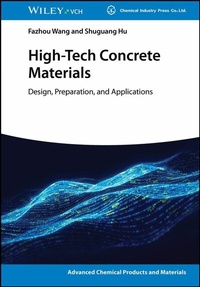
High-Tech Concrete Materials
Design, Preparation, and Applications
1. Auflage
Erschienen am 9. März 2026
384 Seiten
978-3-527-84598-9 (ISBN)
Beschreibung

A comprehensive treatment of high-tech concrete materials across research, engineering, and industrial practice
Concrete materials research has entered a transformative era, where technological innovation and advanced material science converge to redefine structural and functional performance. High-Tech Concrete Materials: Design, Preparation, and Applications addresses the pressing need for a systematic framework that integrates high-performance concrete design with cutting-edge preparation methods and sustainable application strategies.
In-depth chapters cover a wide spectrum of innovations, including the microstructural optimization of ultra-high-strength concretes, the durability preservation of ultra-high-performance concretes, composite structural concretes applied in mega-infrastructure projects, and pioneering methods such as CO2-driven 3D printing concrete. Richly supported with case studies, patents, and engineering applications, the book highlights how academic insights translate into real-world performance.
High-Tech Concrete Materials: Design, Preparation, and Applications:
* Provides thorough coverage of raw material design, structural performance enhancement, and sustainability strategies
* Features detailed discussion of innovative admixtures, polymers, nano-seeding technologies, and fiber reinforcement mechanisms
* Offers insight into microstructural optimization and durability preservation for ultra-high-strength and ultra-high-performance concretes
* Establishes an approach that emphasizes multifunctional, eco-sustainable concrete systems for future development
Designed to provide readers with both conceptual clarity and practical guidance, High-Tech Concrete Materials: Design, Preparation, and Applications is ideal for advanced undergraduate and graduate courses in Materials Science, Civil Engineering, Construction Engineering, and Inorganic Chemistry, particularly within degree programs focused on structural materials and sustainable infrastructure. It is also a vital reference for researchers, materials scientists, and industry professionals engaged in high-performance concrete design and application.
Concrete materials research has entered a transformative era, where technological innovation and advanced material science converge to redefine structural and functional performance. High-Tech Concrete Materials: Design, Preparation, and Applications addresses the pressing need for a systematic framework that integrates high-performance concrete design with cutting-edge preparation methods and sustainable application strategies.
In-depth chapters cover a wide spectrum of innovations, including the microstructural optimization of ultra-high-strength concretes, the durability preservation of ultra-high-performance concretes, composite structural concretes applied in mega-infrastructure projects, and pioneering methods such as CO2-driven 3D printing concrete. Richly supported with case studies, patents, and engineering applications, the book highlights how academic insights translate into real-world performance.
High-Tech Concrete Materials: Design, Preparation, and Applications:
* Provides thorough coverage of raw material design, structural performance enhancement, and sustainability strategies
* Features detailed discussion of innovative admixtures, polymers, nano-seeding technologies, and fiber reinforcement mechanisms
* Offers insight into microstructural optimization and durability preservation for ultra-high-strength and ultra-high-performance concretes
* Establishes an approach that emphasizes multifunctional, eco-sustainable concrete systems for future development
Designed to provide readers with both conceptual clarity and practical guidance, High-Tech Concrete Materials: Design, Preparation, and Applications is ideal for advanced undergraduate and graduate courses in Materials Science, Civil Engineering, Construction Engineering, and Inorganic Chemistry, particularly within degree programs focused on structural materials and sustainable infrastructure. It is also a vital reference for researchers, materials scientists, and industry professionals engaged in high-performance concrete design and application.
Weitere Details
Weitere Ausgaben
Andere Ausgaben
Buch
04/2026
1. Auflage
Wiley-VCH
149,00 €
Sofort lieferbar
Personen
Shuguang Hu is Chief Professor of Materials Science at Wuhan University of Technology. He was the former Dean of the School of Materials Science and Engineering and the Deputy Director of the State Key Laboratory of Silicate Building Materials. Professor Hu has been engaged in teaching and scientific research in the field of advanced cement-based materials for 40 years. He is the recipient of many prestigious awards, including one National Technological Invention Award (2nd place) and five National Science and Technology Progress Awards (2nd place. Prof. Hu has served as the editor of many professional journals and in academic organizations.
Fazhou Wang is Professor of Materials Science at Wuhan University of Technology. He is currently the Director of the State Key Laboratory of Silicate Materials for Architectures. He has been engaged in the academic research and engineering application of high-performance cement-based materials. He has received many scientific awards, including two National Science and Technology Progress Awards (2nd place), and six provincial and ministerial Science and Technology Progress Awards (1st place). He is the editors for many professional journals and serves in many academic organizations.
Fazhou Wang is Professor of Materials Science at Wuhan University of Technology. He is currently the Director of the State Key Laboratory of Silicate Materials for Architectures. He has been engaged in the academic research and engineering application of high-performance cement-based materials. He has received many scientific awards, including two National Science and Technology Progress Awards (2nd place), and six provincial and ministerial Science and Technology Progress Awards (1st place). He is the editors for many professional journals and serves in many academic organizations.
Inhalt
Contents
Chapter 1 Introduction
1.1 Overview
1.2 Brief History of Advanced Technology Concrete Development
1.3 Challenges and Opportunities for Concrete Materials
1.4 Technical Characteristics and Research Content of Advanced Technology Concrete
Chapter 2 Cementitious Material for Advanced Technology Concrete
2.1 Characteristics of Advanced Technology Concrete
2.2 Types of Cementitious Materials for Advanced Technology Concrete
2.3 Mechanism and Properties of Cementitious Materials for Advanced Technology Concrete
2.4 Prospects for Design and Development of Composite Cementitious Materials
Chapter 3 Functional Materials for Advanced Technology Concrete
3.1 Concrete Admixtures
3.2 Polymer Materials
3.3 Fiber Material
3.4 Ultra Fine Powder
3.5 Nano Seeds
3.6 Internal Curing Functional Materials
3.7 Functional Aggregates
Chapter 4 Ultra-high Strength Concrete
4.1 Macro Defect Free Cement
4.2 Densified System Containing Homogenously Arranged Ultra-fine Particles
4.3 Compact Reinforced Composite
4.4 Reactive Particle Concrete
4.5 Reinforcement Mechanism of Ultra-high Strength Cementitious Composite
Chapter 5 Ultra-high Performance Concrete
5.1 Overview of Ultra-high Performance Concrete
5.2 Design of Ultra-high Performance Concrete
5.3 Physical and Mechanical Properties of Ultra-high Performance Concrete (UHPC)
5.4 Volumetric Stability of Ultra-high Performance Concrete
5.5 Durability Properties of Ultra-high Performance Concrete
5.6 Novel Ultra-high Performance Concrete
5.7 Application of Ultra-high Performance Concrete for Municipal Solid Waste Pre-treatment Plants
Chapter 6 High Performance Composite Structural Concrete
6.1 Concrete-filled Steel Tubes Combination Material
6.2 Steel-concrete/asphalt Composite Bridge Deck Paving Structural Materials
6.3 Composite Materials for Structural/Functional Tunnel Concrete
6.4 High Strength Lightweight Aggregate Concrete
Chapter 7 Novel Functional Concrete Technologies
7.1 Recyclable Cement and Concrete
7.2 Resin Aggregate Concrete
7.3 CO2-driven 3D Printing Concrete
Chapter 1 Introduction
1.1 Overview
1.2 Brief History of Advanced Technology Concrete Development
1.3 Challenges and Opportunities for Concrete Materials
1.4 Technical Characteristics and Research Content of Advanced Technology Concrete
Chapter 2 Cementitious Material for Advanced Technology Concrete
2.1 Characteristics of Advanced Technology Concrete
2.2 Types of Cementitious Materials for Advanced Technology Concrete
2.3 Mechanism and Properties of Cementitious Materials for Advanced Technology Concrete
2.4 Prospects for Design and Development of Composite Cementitious Materials
Chapter 3 Functional Materials for Advanced Technology Concrete
3.1 Concrete Admixtures
3.2 Polymer Materials
3.3 Fiber Material
3.4 Ultra Fine Powder
3.5 Nano Seeds
3.6 Internal Curing Functional Materials
3.7 Functional Aggregates
Chapter 4 Ultra-high Strength Concrete
4.1 Macro Defect Free Cement
4.2 Densified System Containing Homogenously Arranged Ultra-fine Particles
4.3 Compact Reinforced Composite
4.4 Reactive Particle Concrete
4.5 Reinforcement Mechanism of Ultra-high Strength Cementitious Composite
Chapter 5 Ultra-high Performance Concrete
5.1 Overview of Ultra-high Performance Concrete
5.2 Design of Ultra-high Performance Concrete
5.3 Physical and Mechanical Properties of Ultra-high Performance Concrete (UHPC)
5.4 Volumetric Stability of Ultra-high Performance Concrete
5.5 Durability Properties of Ultra-high Performance Concrete
5.6 Novel Ultra-high Performance Concrete
5.7 Application of Ultra-high Performance Concrete for Municipal Solid Waste Pre-treatment Plants
Chapter 6 High Performance Composite Structural Concrete
6.1 Concrete-filled Steel Tubes Combination Material
6.2 Steel-concrete/asphalt Composite Bridge Deck Paving Structural Materials
6.3 Composite Materials for Structural/Functional Tunnel Concrete
6.4 High Strength Lightweight Aggregate Concrete
Chapter 7 Novel Functional Concrete Technologies
7.1 Recyclable Cement and Concrete
7.2 Resin Aggregate Concrete
7.3 CO2-driven 3D Printing Concrete
