

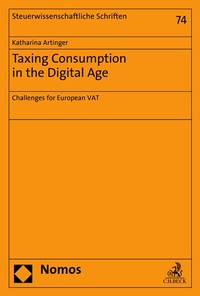
Taxing Consumption in the Digital Age
Challenges for European VAT
1. Auflage
Erschienen am 16. Oktober 2020
336 Seiten
978-3-7489-1045-9 (ISBN)
Beschreibung

Die Digitalisierung hat enorme Auswirkungen auf die Grundidee der Mehrwertsteuer: den Austausch von Leistungen für Konsumzwecke. Die Dissertation konzentriert sich auf den Austausch von scheinbar "kostenlosen" Online-Dienstleistungen und die Zustimmung der Kunden zur Verwertung ihrer persönlichen Daten. Diese können der Mehrwertsteuer unterliegen, wobei die Bemessungsgrundlage auf Grundlage der Anbieterkosten berechnet werden muss. Die Ergebnisse basieren auf einer Analyse der EU-Mehrwertsteuer als Verbrauchsteuer im Vergleich zu anderen theoretischen Konsummodellen. Auch andere digitale Geschäftsmodelle, wie die Sharing Economy oder Bitcoins, können unter die Idee der EU-Mehrwertsteuer als Verbrauchsteuer subsumiert werden.
Dissertationspreis der Nürnberger Steuergespräche e.V. 2020
Weitere Details
Weitere Ausgaben
Andere Ausgaben
Buch
10/2020
1. Auflage
Nomos
88,00 €
Versand in 7-9 Tagen
Inhalt
- Cover
- Introduction
- I. Multi-Sided Online Business Models and the European VAT System
- II. The Concept of EU VAT Consumption Suitable for Digitalization: Definitions, Literature Overview and Research Objective
- III. Overview
- Chapter 1: Theoretical Concepts of Consumption
- I. Economics
- 1. Macroeconomics: An Aggregated Notion of Consumption
- 2. Microeconomics: Satisfaction as Consumption
- II. Marketing: Consumers' Needs and Wants
- III. Taxation other than Value Added Taxation
- 1. Taxing Consumption and Direct Taxation
- 2. Excise Taxes: Selective Taxation of Consumption
- IV. Summary: Important Findings on Theoretical Concepts of Consumption
- Chapter 2: The Concept of EU VAT as a General Consumption Tax
- I. EU VAT as a General Consumption Tax
- 1. Consumption of Services: Benefits for Identifiable Individuals
- 2. Equal Treatment of Consumption of Goods
- II. Transactions: Proxies for Consumption
- 1. Business Transactions Instead of Actual Consumption
- a. Transactions as Proxies
- b. Transactions by Taxable Persons
- 2. Further ECJ Requirements for Transactions
- a. Direct Link Requirement
- b. Legal Relationship
- III. Additional Adjustments to the Concept of EU VAT as a General Consumption Tax
- 1. Illegal Transactions
- 2. Anticipated Consumption
- 3. Free Supplies of Goods and Services
- a. Free Supplies as Deemed Transactions
- b. A Broad Base of Taxable Free Transactions of Goods
- IV. Summary: The Concept of EU VAT as a General Consumption Tax
- Chapter 3: Digital Challenges to the Concept of EU VAT as a General Consumption Tax
- I. Digital Changes of Supply and Demand Structures and their Market Exchange
- 1. Increased Importance of Digital Services
- 2. Increased Digital Market Interaction of Private Consumers
- a. Transactions of the Sharing Economy
- b. Private Consumers as Taxable Persons ("Prosumers")
- 3. Digital Kinds of Consideration
- a. Bidirectional Virtual Currencies: Money in an Economic Sense
- b. Personal Data: No Money According to the EU VAT Directive
- II. The Concept of EU VAT as a General Consumption Tax Suitable for Multi-Sided Online Business Models
- 1. Supplies in the Context of Multi-Sided Online Business Models
- a. Electronically Supplied Services by Online Businesses
- b. Transfers of the Right to Exploit Personal Data by Users
- aa. Ancillary Services
- bb. Independent Services: Exploitation Rights on Personal Data
- 2. Privately Acting Users: A B2C Relationship
- a. Private Consumers as Non-Taxable Persons
- b. Private Consumers as Non-Employed Persons
- 3. Barter Transactions versus Non-Taxable Exchanges
- 4. Equal Treatment of Goods and Services: No Extension of the Definition of Deemed Transactions of Services
- 5. A Cost Approach for the Taxable Amount of Barter Transactions
- a. The Taxable Amount According to Suppliers' Costs
- b. A Cost Approach for Bartering "Free" Online Services
- aa. Unsuitable External Accounting Information According to IAS/IFRS
- bb. The Taxable Amount for Barter Transactions According to Internal Accounting Information
- III. Summary: The Concept of EU VAT as a General Consumption Tax Suitable for Digitalization
- Conclusion
- References
