

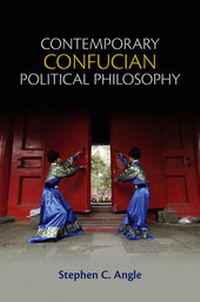
Contemporary Confucian Political Philosophy
Erschienen am 18. April 2013
220 Seiten
978-0-7456-7604-3 (ISBN)
Beschreibung

Confucian political philosophy has recently emerged as a vibrant area of thought both in China and around the globe. This book provides an accessible introduction to the main perspectives and topics being debated today, and shows why Progressive Confucianism is a particularly promising approach. Students of political theory or contemporary politics will learn that far from being confined to a museum, contemporary Confucianism is both responding to current challenges and offering insights from which we can all learn.
The Progressive Confucianism defended here takes key ideas of the twentieth-century Confucian philosopher Mou Zongsan (1909-1995) as its point of departure for exploring issues like political authority and legitimacy, the rule of law, human rights, civility, and social justice. The result is anti-authoritarian without abandoning the ideas of virtue and harmony; it preserves the key values Confucians find in ritual and hierarchy without giving in to oppression or domination. A central goal of the book is to present Progressive Confucianism in such a way as to make its insights manifest to non-Confucians, be they philosophers or simply citizens interested in the potential contributions of Chinese thinking to our emerging, shared world.
The Progressive Confucianism defended here takes key ideas of the twentieth-century Confucian philosopher Mou Zongsan (1909-1995) as its point of departure for exploring issues like political authority and legitimacy, the rule of law, human rights, civility, and social justice. The result is anti-authoritarian without abandoning the ideas of virtue and harmony; it preserves the key values Confucians find in ritual and hierarchy without giving in to oppression or domination. A central goal of the book is to present Progressive Confucianism in such a way as to make its insights manifest to non-Confucians, be they philosophers or simply citizens interested in the potential contributions of Chinese thinking to our emerging, shared world.
Weitere Details
Weitere Ausgaben
Andere Ausgaben
Buch
06/2012
Polity Press
25,50 €
Artikel z.Zt. nicht lieferbar
Stephen C. Angle
Contemporary Confucian Political Philosophy
Buch
06/2012
Polity Press
67,50 €
Versand in 15-20 Tagen
Person
Stephen C. Angle is professor of philosophy at Wesleyan University.
Inhalt
Preface page vii
1 Introduction: Contextualizing Progressive Confucianism 1
2 Self-Restriction: The Indirect Link Between Ethics and Politics 24
3 Rethinking Authority and Rejecting Authoritarianism: Giving the People their Voice 36
4 Debating the Rule of Law and Virtue Politics: Zhang Shizhao, Mou Zongsan, and Today 58
5 The Rights of All Under Heaven: Human Rights and Contemporary Confucianism 74
6 Neither Ethics nor Law: Ritual Propriety as Confucian Civility 91
7 Virtue, Politics, and Social Criticism: Toward Deference without Oppression 111
8 Conclusion: The Shape of Confucian Virtue-Ritual-Politics 136
Notes 147
Bibliography 180
Index and Glossary of Chinese Terms 194
1 Introduction: Contextualizing Progressive Confucianism 1
2 Self-Restriction: The Indirect Link Between Ethics and Politics 24
3 Rethinking Authority and Rejecting Authoritarianism: Giving the People their Voice 36
4 Debating the Rule of Law and Virtue Politics: Zhang Shizhao, Mou Zongsan, and Today 58
5 The Rights of All Under Heaven: Human Rights and Contemporary Confucianism 74
6 Neither Ethics nor Law: Ritual Propriety as Confucian Civility 91
7 Virtue, Politics, and Social Criticism: Toward Deference without Oppression 111
8 Conclusion: The Shape of Confucian Virtue-Ritual-Politics 136
Notes 147
Bibliography 180
Index and Glossary of Chinese Terms 194
