

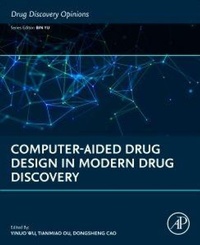
Computer-Aided Drug Design in Modern Drug Discovery
Erscheint ca. am 1. Mai 2026
Buch
Softcover
450 Seiten
978-0-443-45105-8 (ISBN)
Beschreibung
Computer-Aided Drug Design (CADD) is a key technology in pharmacology, significantly influencing the development of numerous marketed drugs. Despite the wealth of theoretical literature on CADD, there remains a critical gap in resources that illustrate its practical applications. Computer-Aided Drug Design in Modern Drug Discovery bridges that gap by offering an in-depth exploration of CADD, featuring real-world case studies and practical examples that empower researchers to harness this technology effectively in drug discovery and development. Exploring the intricacies of CADD, the book comprises several key chapters, beginning with an introduction to its methods and evolution, followed by a thorough examination of the integration of artificial intelligence in drug design. Subsequent chapters cover various CADD approaches, including ligand-based, structure-based, and fragment-based design, alongside AI-driven compound generation and drug screening. The book also showcases a selection of marketed drugs developed with CADD or AI, such as Captopril, Tirofiban, and Crizotinib, providing invaluable insights into the successes and challenges faced in real-world applications. Finally, the discussion of emerging trends and future directions in CADD and AI highlights the ongoing evolution of these methodologies and their integration with traditional drug development processes. By emphasizing accessible language and practical applications, this book serves as an essential resource for pharmacology researchers, practitioners, and students alike, enabling them to navigate the complexities of drug design with confidence. Medicinal chemists will also benefit from this comprehensive guide to enhance your understanding of CADD and inspire innovative approaches to drug discovery and development.
Weitere Details
Reihe
Sprache
Englisch
Verlagsort
San Diego
USA
Verlagsgruppe
Elsevier Science Publishing Co Inc
Zielgruppe
Für Beruf und Forschung
Produkt-Hinweis
Broschur/Paperback
Klebebindung
Maße
Höhe: 235 mm
Breite: 191 mm
Gewicht
449 gr
ISBN-13
978-0-443-45105-8 (9780443451058)
Copyright in bibliographic data and cover images is held by Nielsen Book Services Limited or by the publishers or by their respective licensors: all rights reserved.
Schweitzer Klassifikation
Weitere Ausgaben
Andere Ausgaben
Yinuo Wu | Tianmiao Ou | Dongsheng Cao
Computer-Aided Drug Design in Modern Drug Discovery
E-Book
05/2026
Elsevier
185,99 €
Als Download verfügbar
Personen
Dr. Yinuo Wu is an associate Professor in Medicinal Chemistry. She did her undergraduate degree at the Sun Yat-sen University (2002-2006) and then carried out a PhD (2006-2011). After two years of post-doctoral at the Hong Kong polytechnic University, she started her academic career in 2013 at Sun Yat-sen University. Dr. Yinuo Wu is particularly interested in the development of anti-fibrosis drug candidates. In the last five years, Dr. Wu has more than 50 publications and several patents on this field.
Dr. Tianmiao Ou is a Professor in Medicinal Chemistry and Chemical Biology. She did her undergraduate degree at the China Pharmaceutical University (1998-2002) and then carried out a PhD under the supervision of Professor Lianquan Gu (2002-2007). She started her academic career in 2007 in the Sun Yat-sen University. She had traveled to UK as an academic visitor and worked in the group of Professor Shankar Balasubramanian at the University of Cambridge (2012-2013). The whole group is particularly interested in the role of non-canonical nucleic acid structures that control gene expression (e.g. G-quadruplexes, and RNA structures in the non-coding regions of mRNAs). Their goal is to find out small organic molecules that target such structures and alter the expression of certain genes of interest. Such small molecule gene regulators are valuable tools to study mechanisms in biology and will also open up new approaches for therapeutics and molecular medicine, particularly for diseases characterized by aberrant expression of certain genes. Under the support of various funding, Dr. Ou has more than 70 publications and several patents on this field.
Dr. Dongsheng Cao is a Professor at the Xiya School of Pharmaceutical Science at Central South University. He is mainly engaged in research on efficient chemical informatics and drug molecule design methods and applications based on artificial intelligence technology. Focusing on three key technical bottlenecks in drug development (discovery of bioactive molecules, prediction of drug properties and safety, and evaluation of selectivity/off-target effects/drug resistance), he conducts systematic and in-depth interdisciplinary methodological research on virtual screening methods based on structures/ligands, prediction of drug properties theory, molecular target recognition, and molecular intelligence generation and optimization. Prof. Cao has already published more than 270 publications with a maximum citation count of 1691 per paper.
Dr. Tianmiao Ou is a Professor in Medicinal Chemistry and Chemical Biology. She did her undergraduate degree at the China Pharmaceutical University (1998-2002) and then carried out a PhD under the supervision of Professor Lianquan Gu (2002-2007). She started her academic career in 2007 in the Sun Yat-sen University. She had traveled to UK as an academic visitor and worked in the group of Professor Shankar Balasubramanian at the University of Cambridge (2012-2013). The whole group is particularly interested in the role of non-canonical nucleic acid structures that control gene expression (e.g. G-quadruplexes, and RNA structures in the non-coding regions of mRNAs). Their goal is to find out small organic molecules that target such structures and alter the expression of certain genes of interest. Such small molecule gene regulators are valuable tools to study mechanisms in biology and will also open up new approaches for therapeutics and molecular medicine, particularly for diseases characterized by aberrant expression of certain genes. Under the support of various funding, Dr. Ou has more than 70 publications and several patents on this field.
Dr. Dongsheng Cao is a Professor at the Xiya School of Pharmaceutical Science at Central South University. He is mainly engaged in research on efficient chemical informatics and drug molecule design methods and applications based on artificial intelligence technology. Focusing on three key technical bottlenecks in drug development (discovery of bioactive molecules, prediction of drug properties and safety, and evaluation of selectivity/off-target effects/drug resistance), he conducts systematic and in-depth interdisciplinary methodological research on virtual screening methods based on structures/ligands, prediction of drug properties theory, molecular target recognition, and molecular intelligence generation and optimization. Prof. Cao has already published more than 270 publications with a maximum citation count of 1691 per paper.
Inhalt
1. Introduction to Computer-Aided Drug Design
2. Introduction of AI in Drug Design
3. Approaches of CADD in Drug Discovery
4. Marketed or clinical Drugs Designed aided by CADD or AI
5. Emerging Trends and Future Directions in CADD and AI
2. Introduction of AI in Drug Design
3. Approaches of CADD in Drug Discovery
4. Marketed or clinical Drugs Designed aided by CADD or AI
5. Emerging Trends and Future Directions in CADD and AI