

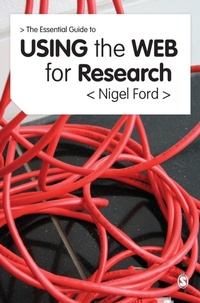
The Essential Guide to Using the Web for Research
1. Auflage
Erschienen am 18. Oktober 2011
Buch
Hardcover
256 Seiten
978-0-85702-364-3 (ISBN)
Beschreibung
This book will be vital reading for anyone doing research, since using the web to find high quality information is a key research skill. It introduces beginners and experts alike to the most effective techniques for searching the web, assessing and organising information and using it in a range of scenarios from undergraduate essays and projects to PhD research.
Nigel Ford shows how using the web poses opportunities and challenges that impact on student research at every level, and he explains the skills needed to navigate the web and use it effectively to produce high quality work.
Ford connects online skills to the research process. He helps readers to understand research questions and how to answer them by constructing arguments and presenting evidence in ways that will enhance their impact and credibility.
The book includes clear and helpful coverage of beginner and advanced search tools and techniques, as well as the processes of:
@!critically evaluating online information
@!creating and presenting evidence-based arguments
@!organizing, storing and sharing information
@!referencing, copyright and plagiarism.
As well as providing all the basic techniques students need to find high quality information on the web, this book will help readers use this information effectively in their own research.
Nigel Ford is Professor in the University of Sheffield's Information School.
Nigel Ford shows how using the web poses opportunities and challenges that impact on student research at every level, and he explains the skills needed to navigate the web and use it effectively to produce high quality work.
Ford connects online skills to the research process. He helps readers to understand research questions and how to answer them by constructing arguments and presenting evidence in ways that will enhance their impact and credibility.
The book includes clear and helpful coverage of beginner and advanced search tools and techniques, as well as the processes of:
@!critically evaluating online information
@!creating and presenting evidence-based arguments
@!organizing, storing and sharing information
@!referencing, copyright and plagiarism.
As well as providing all the basic techniques students need to find high quality information on the web, this book will help readers use this information effectively in their own research.
Nigel Ford is Professor in the University of Sheffield's Information School.
Rezensionen / Stimmen
Well structured, thorough, accessibly written and presented, Nigel Ford uses lots of charts, diagrams and step-by-step guides to steer the reader... It is primarily targeted at undergraduate and postgraduate students who will definitely find it invaluable when setting out on their dissertations and theses...That said, this guide will prove equally useful for professional researchers in any field...Overall I consider this a very useful and timely book. Indeed I wish I'd seen it many years ago. Its key strengths are its pertinence to researchers' current needs, thoroughness, detailed discussions, accessibility, step by step approach and supply of handy techniques and tips.Berni Graham
SRA News
Ford offers the answers to the question of how to find interesting web material for your research and it is clear that here is where Ford's expertise comes through. Personally, I use mainly Google, Picarta and some catalogues of universities and research institutions. Ford offers a number of additions to my repertoire. In addition to Google, he includes SciVerse Scopus and Web of Knowledge and advises that a systematic search strategy should constantly be evaluated and, if necessary, adjusted. -- Raynald Bosch
Weitere Details
Sprache
Englisch
Verlagsort
London
Großbritannien
Zielgruppe
Für höhere Schule und Studium
Maße
Höhe: 250 mm
Breite: 175 mm
Dicke: 18 mm
Gewicht
627 gr
ISBN-13
978-0-85702-364-3 (9780857023643)
Copyright in bibliographic data and cover images is held by Nielsen Book Services Limited or by the publishers or by their respective licensors: all rights reserved.
Schweitzer Klassifikation
Weitere Ausgaben
Andere Ausgaben

Buch
10/2011
1. Auflage
SAGE Publications Ltd
83,60 €
Versand in 15-20 Tagen
E-Book
10/2011
1. Auflage
SAGE Publications Ltd
ab
63,89 €
Als Download verfügbar
E-Book
10/2011
1. Auflage
SAGE Publications Ltd
75,99 €
Als Download verfügbar
Person
Nigel Ford is Professor in the University of Sheffield's Information School.
Inhalt
Introduction
Why Read This Book?
The Book's Underlying Rationale
Search Tools Covered in this Book
Learning and Critical Thinking: The Essentials
Learning and Assessment Basics
Essential Learning Components
Summary
Clarifying What Is Required of You
Clarifying the Nature of your Assignment
Planning your Assignment
Summary
Finding High-Quality Information
Defining 'Authoritative' Information
Information Seeking
Summary
How to Do a Literature Review
Initial Explorations
Strategies for Finding High-Quality Academic Sources
Summary
Information Sources and Search Tools
Types of information source
Types of search tool
Summary
Mapping Search Approaches and Techniques to Information Needs
Directory-Based Browsing and Searching
Topic Similarity Searching
Document Similarity Searching
Filtering
Citation Searching
Boolean and Other Advanced Search Engine Operators
Summary
Scholarly Search Tools in Detail
When to Use Which Search Tools
Google Scholar
SciVerse Scopus
Web of Knowledge Incorporating Web of Science
Summary
Transforming Information into Evidence-Based Arguments
Making Information 'Your Own'
Critically Evaluating Information
Validity, Reliability, Objectivity and Generalisability as Critical Tools
Developing Your Own Evidence-Based Arguments
Summary
Presenting Your Evidence Effectively
Plagiarism
Citing Your Sources
Summary
Keeping up to Date
A New Document is Published on your Topic
Documents in Which You Are Interested Are Cited in a Newly Published Document
An Author is Cited by a New Document or Publishes a New Document
A New Issue of a Journal in which you are Interested is Published
A website in Which You Are Interested is Updated
Summary
Organizing and Sharing Your Information
Mendeley Basics
Importing Data from Google Scholar and Other Search Tools
Adding PDF Files to Your Library
Inserting References into Your Work
Summary
Why Read This Book?
The Book's Underlying Rationale
Search Tools Covered in this Book
Learning and Critical Thinking: The Essentials
Learning and Assessment Basics
Essential Learning Components
Summary
Clarifying What Is Required of You
Clarifying the Nature of your Assignment
Planning your Assignment
Summary
Finding High-Quality Information
Defining 'Authoritative' Information
Information Seeking
Summary
How to Do a Literature Review
Initial Explorations
Strategies for Finding High-Quality Academic Sources
Summary
Information Sources and Search Tools
Types of information source
Types of search tool
Summary
Mapping Search Approaches and Techniques to Information Needs
Directory-Based Browsing and Searching
Topic Similarity Searching
Document Similarity Searching
Filtering
Citation Searching
Boolean and Other Advanced Search Engine Operators
Summary
Scholarly Search Tools in Detail
When to Use Which Search Tools
Google Scholar
SciVerse Scopus
Web of Knowledge Incorporating Web of Science
Summary
Transforming Information into Evidence-Based Arguments
Making Information 'Your Own'
Critically Evaluating Information
Validity, Reliability, Objectivity and Generalisability as Critical Tools
Developing Your Own Evidence-Based Arguments
Summary
Presenting Your Evidence Effectively
Plagiarism
Citing Your Sources
Summary
Keeping up to Date
A New Document is Published on your Topic
Documents in Which You Are Interested Are Cited in a Newly Published Document
An Author is Cited by a New Document or Publishes a New Document
A New Issue of a Journal in which you are Interested is Published
A website in Which You Are Interested is Updated
Summary
Organizing and Sharing Your Information
Mendeley Basics
Importing Data from Google Scholar and Other Search Tools
Adding PDF Files to Your Library
Inserting References into Your Work
Summary